The Homeowner’s Guide to a Greener, More Energy-Efficient Home: Analyzing 2026 Sustainability Trends
 Avedyn Phytes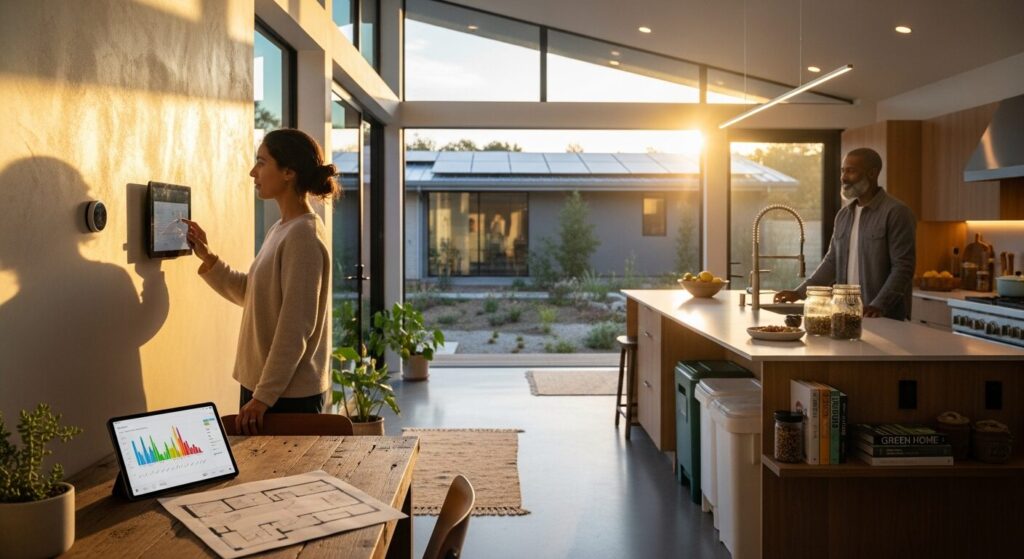
In the United States, residential energy use accounts for approximately 20% of the nation’s annual greenhouse gas emissions. Rising energy prices and a growing consumer demand for low-maintenance, climate-adaptive properties are driving significant capital into eco-friendly home renovations. Homeowners are actively transitioning from short-term fixes to longer-range energy planning to withstand rising utility costs and infrastructure strain.
- Strategic adoption of smart technology actively reduces grid dependence and cuts overall household energy consumption.
- Upgrading structural efficiency through advanced insulation and roofing materials yields significant, measurable financial returns.
- Adopting renewable energy generation with optimized utility contracts accelerates the return on investment for property upgrades.
Evaluating the Cost-Benefit of Energy Efficiency
Treating sustainability as a rigorous financial strategy dictates the 2026 housing market. In 2023, more than 3.4 million American families utilized $8.4 billion in tax credits for clean energy and efficiency upgrades. Industry data shows that refurbished properties produce half the emissions of building a new home, positioning targeted renovation as the preferred economic and environmental path over new construction. Zonda’s early 2026 housing trends report confirms that buyers are actively seeking deals to alleviate economic uncertainty, making properties with low operational costs highly competitive.
| System / Upgrade | Traditional Baseline | 2026 Energy-Efficient Standard | Financial ROI / Implication |
| HVAC | Standard Fossil Fuel Boiler | Air Source Heat Pump / Condensing Boiler | Saves $500–$1,000 annually. |
| Appliances | Standard Washer/Dryer | ENERGY STAR Certified Models | Uses 20% less energy; saves $550 over lifetime. |
| Roofing | Standard Asphalt Shingles | Metal “Cool Roof” Systems | High reflectivity reduces heat gain and AC loads. |
| Windows | Single/Double Pane (Standard) | Triple-Pane with Low-E Coatings | Elevates thermal resistance; limits solar heat gain. |
Optimizing Consumption Through Intelligent Systems
The global home energy management market will reach $13.7 billion by 2033, reflecting a rapid shift from basic gadgets to comprehensive consumption control. The American Council for an Energy-Efficient Economy recently published a report urging greater efficiency and flexibility to ease grid demand, presenting these upgrades as significantly cheaper than building new generation assets. Properly configured systems shift residential energy profiles into measurable asset management.
- Algorithmic Climate Control: Smart thermostats adjust temperatures based on exact occupancy and usage patterns, driving consistent efficiency.
- Unified Automation Hubs: Multi-device hubs unify lighting, climate, and security into a single interface that responds seamlessly to daily routines.
- Appliance Load Shifting: Smart appliances monitor real-time energy consumption and automatically schedule heavy operations during off-peak grid hours.
- Resource Management: Low-flow plumbing fixtures paired with digital monitoring can reduce household water consumption by up to 20%.
When deployed effectively, properly configured smart homes reduce overall energy consumption by 30-40%.
The Role of Insulation, Glazing, and Roofing
Physical property upgrades remain mandatory to maximize the financial returns of automated technology. Data indicates that sealing air leaks and upgrading attic insulation reduces a homeowner’s energy bill by 10% to 50%. The industry is currently executing a transition toward super-insulated, impact-resistant roofing designed to accommodate solar panel installations. In real estate markets, energy-efficient homes are experiencing a 70% surge in listing popularity, with buyers actively seeking properties equipped with whole-home batteries and EV charging capabilities. Homeowners planning to maximize living space recognize that thermal retention heavily dictates the usability of modernized interiors.
Navigating the Energy Provider Landscape
Renewable energy infrastructure adds distinct equity to modernized housing. Properties equipped with residential solar panels save a median of $2,230 annually on utility bills, while installations increase resale value by an average of 4.1%. In 2023, renewable energy sources accounted for approximately 21% of total US electrical generation. Today, small rooftop installations and entry-level systems are expanding as property owners aggressively pursue long-range energy planning.
Upgrading physical infrastructure and installing solar panels represent only half of the energy-efficiency equation. To fully monetize these upgrades, homeowners must critically evaluate how they interact with the broader electrical grid. Capitalizing on renewable energy generation requires partnering with a utility provider that actually rewards efficiency and sustainable practices.
For residents in deregulated markets, carefully selecting from available Rhythm Energy plans can drastically accelerate the return on investment for home upgrades. Rhythm Energy provides tailored solutions that align with the modernized home, offering unique structures like Time of Use (TOU) pricing and comprehensive Solar Buyback programs. These plans allow homeowners to utilize electricity when market rates are lowest and receive fair compensation for the excess solar power their properties generate.
Furthermore, aligning with a forward-thinking provider bridges the gap between passive sustainability and active financial management. By utilizing Simple Fixed Rate plans backed by Texas Wind or Solar, consumers guarantee that their newly optimized, smart-connected homes are powered entirely by renewable sources. This strategic alignment hedges against volatile fossil fuel markets while solidifying the home’s operational cost stability.
Long-Term Value in Energy Transformation
Achieving a greener home in 2026 is no longer a peripheral environmental initiative, but a primary strategy for asset preservation and cost reduction. Property owners who recognize this shift are outperforming the broader real estate market by shielding their households from utility price shocks. The initial capital allocated toward modernization directly converts into predictable, long-term operational savings.
The combination of physical insulation, behavioral automation through smart technology, and strategic energy provider selection creates a highly resilient financial asset. By upgrading structural thermal retention and actively managing grid interactions, consumers generate measurable returns. This calculated approach to property management ensures that modern homes remain competitive, cost-effective, and environmentally responsible for decades to come.
Disclaimer: This article is for informational purposes only and should not be considered investment, legal, or tax advice. The views expressed are those of the author(s) and do not necessarily reflect the official policy or position of Market Tides. All investments involve risk, and past performance is not indicative of future results.

 Abbukkhar Kangharnnia