
 Dpzhuk Znnkberin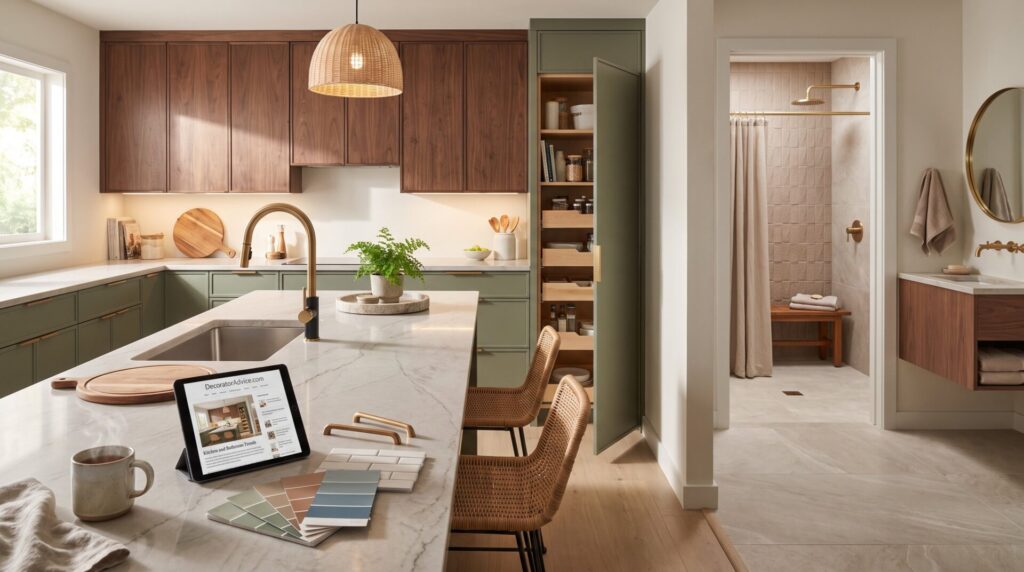
Kitchen and Bathroom Trends on DecoratorAdvice.com highlight warmer, nature-inspired, and highly functional updates for 2026. These trends focus on personal comfort, timeless materials, and smart storage that benefit both homeowners and renters. The article outlines kitchen and bathroom directions, practical adoption tips, and budgeting guidance so readers can make targeted changes without full remodels.
Key Takeaways
- Kitchen and bathroom trends for 2026 emphasize warmer, nature-inspired designs and functional luxury to improve comfort and appeal.
- Homeowners and renters can adopt these trends with small updates like warmer metal hardware, quality fixtures, and natural materials without a full remodel.
- Prioritize investments in durable surfaces, efficient ventilation, and high-quality faucets to enhance daily use and protect home value.
- Zoned kitchen layouts and spa-like bathroom features such as rain showerheads increase usability and create calming environments.
- Budget wisely by saving on paint and hardware swaps while spending on items that offer lasting functional benefits.
- Following DecoratorAdvice.com’s tips helps avoid costly renovation mistakes and ensures changes align with future resale preferences.
Why These Trends Matter For Homeowners And Renters Alike
These trends matter because they improve daily life while protecting value. Homeowners gain features that attract buyers, durable stone counters, quality fixtures, and layered lighting. Renters get reversible updates, paint, hardware, and add-on storage, that make small places feel personal without violating leases.
Functional luxury is central: better ventilation, smarter storage, and spa-like bathroom touches produce measurable comfort. For example, switching to a rain showerhead and a vent with higher flow can reduce humidity and mold risk, improving indoor air quality for everyone.
Warm neutrals and durable natural materials recur in DecoratorAdvice ideas for patios, gardens and outdoor rooms. They also support resale: buyers often prefer warm neutrals and natural stone over transient high-contrast trends. For practical planning, readers should review what interior decorators wish homeowners knew before a renovation: that guidance highlights common cost and sequencing mistakes that affect both owners and occupants.
Top Kitchen Trends For 2026
Flat slabs, rich wood tones, and a return to warmer traditional silhouettes lead kitchen design. Designers are favoring soft minimalism, clean lines tempered by tactile wood and stone. Earthy muted colors like clay, soft green, and muted blue replace the all-white dominance.
Natural stone or wood-look slabs anchor countertops and islands. Zoned layouts, separate prep, cooking, and a hidden “back” kitchen, make daily tasks smoother. Customized storage is more common: appliance garages, pull-out pantries, and deep drawers that keep surfaces clear and usable.
These trends align with broader remodeling patterns for 2026 that emphasize practicality and comfort. Homeowners planning a remodel should read practical guidance on how to plan your kitchen and bath remodel to sequence work for minimal disruption. When budgets are tight, focus on quality fixtures and durable surfaces rather than full layout changes.
Designers also note appliance and plumbing upgrades change everyday experience more than cosmetic finishes. For advice on necessary systems, see the piece on plumbing upgrades for a modern kitchen makeover which lists options that increase long-term function.
How To Adopt Kitchen Trends Without Overhauling Your Whole Space
Change the feeling without tearing down walls. Swap hardware and faucets to warmer metals or a mixed-metal palette: one swap creates a cohesive, updated look. Paint cabinets or a single wall in warm neutral or soft green to shift the room’s mood for under $300 in materials.
Wood, rattan and stone can carry the same warmth found in living-room layouts and styling from DecoratorAdvice. These small tactile pieces add texture and scent, wood has a faint resinous smell that reads as comforting in a kitchen.
Create a micro back-kitchen zone: install a slim pull-out appliance cabinet or designate a lower cabinet as a hidden coffee station. These steps borrow the advantages of zoned layouts without moving plumbing. Before changing cabinets or plumbing, review what homeowners should consider before a kitchen remodel to avoid common expensive mistakes.
Finally, invest in targeted plumbing upgrades where it counts, better faucets or a pot-filler, rather than replacing every appliance. These choices improve daily use and hold value at resale.
Top Bathroom Trends For 2026
Bathroom warmth, materials and accessibility also shape the DecoratorAdvice home picture across rooms and renovations. Large, all-purpose showers with bench seating and rainheads give a sense of calm and usability. Open-plan shower layouts reduce barriers and feel more accessible for many users.
Warm palettes and natural materials dominate: soft stone tiles, warm grouts, and wood-veneer vanities replace stark black-and-white contrasts. Handcrafted and checkerboard tiles return as focal points, used sparingly, they add personality without overwhelming the space.
Wall-mounted faucets and streamlined fixtures emphasize clean surfaces and easier cleaning. Designers pair these with textured tiles on a single wall or floor to create depth. For renovation-minded readers, the ultimate guide to bathroom design explains safety, plumbing, and style trade-offs that influence both small and large projects.
Because many bathroom upgrades are functional, spending smartly on quality faucets, showerheads, and ventilation yields lasting benefits: better water flow, lower maintenance, and an improved daily ritual.
How To Adopt Bathroom Trends Without A Major Remodel
Start with fixtures. Replacing a faucet or showerhead with a higher-quality, warmer-metal finish changes the room’s look and improves performance. A wall-mounted faucet can be added where the wall and plumbing layout allow without a full tear-out.
Add texture with a patterned tile feature wall or a peel-and-stick option for rentals. These temporary tiles can mimic handcrafted looks and detach cleanly when someone moves. Layer lighting, add dimmable sconces and under-vanity lighting to create a spa mood for showers and nighttime routines.
Textiles matter: invest in thick, absorbent towels and a weighted linen shower curtain to produce tactile comfort. Small hardware swaps, drawer pulls, mirror frames, and coordinated soap dispensers, create cohesion.
If a project will become part of a sale, consult the dos and don’ts of kitchen remodeling and related bathroom renovation trend posts to ensure choices align with future buyers’ preferences.
Budget-Friendly Tips: Where To Spend, Where To Save
Spend on items that change daily experience and last: faucets, showerheads, lighting, ventilation, and durable counters. A quality faucet may cost $250–$700 but lasts decades and reduces leaks. Good ventilation prevents mold and protects finishes, this is not where to cut corners.
Save on paint, textiles, hardware, and art. A fresh paint color or new pulls cost a few hundred dollars and dramatically shift perception. Renters can use removable options to get the same effect.
For mid-range budgets, prioritize a single quality surface, an engineered stone or honed natural slab for a primary countertop, paired with economical cabinet paint. That combination creates visual impact without full replacement.
Practical example: a homeowner reported spending $1,200 to swap cabinet doors, a new faucet, and pendant lights: the kitchen now feels like a $10,000 renovation to visitors. Conversely, splurging early on custom cabinetry without planning often leads to regret, read what interior decorators wish homeowners knew before a renovation to avoid those exact mistakes.
When in doubt, check leading kitchen design trends to watch 2026 coverage for where consumer sentiment is moving. That helps prioritize changes that hold appeal and value.
Conclusion
DecoratorAdvice’s 2026 kitchen and bathroom trends push warmth, practicality, and natural materials. Small, strategic updates, quality fixtures, focused surfaces, and tactile accessories, deliver big returns in daily comfort and resale appeal. Whether a renter or homeowner, targeted choices let people enjoy modern, personal spaces without full remodels.

 Abbukkhar Kangharnnia
 Avedyn Phytes




 Gary Cripps