Avedyn Phytes
Moving from a crib to an open sleeping arrangement makes good use of the room. A crib will limit a baby’s ability to move during the day and night, impacting their settling and mobility. A montessori floor bed with rails eliminates the barrier, and the child is free to move into or out of the bed and enjoys the bed as a part of their life and routine, instead of a separate controlled space. This is associated with Montessori settings, where children are afforded the freedom to act independently. It does not alter sleep itself, but rather what goes on around sleep, particularly when the child wakes or attempts to shift positions prior to falling asleep.
The shift after crib use
The crib stage usually works in the early months because movement is limited. Over time, that same structure becomes restrictive. A child who wakes up early has no option but to signal an adult. That delay between waking and response can create frustration, even if the child is not upset or in need of attention. When the sleeping surface is placed at floor level, the child is no longer waiting for entry or exit. They can leave the bed on their own and return when ready. This reduces repeated crying tied only to access, not discomfort. In setups like the Lumi Evo Kids Bed, the mattress position supports this transition by keeping the sleeping area low while still structured enough for daily use.
The 2-in-1 Evolution: A Bed That Grows With Your Child
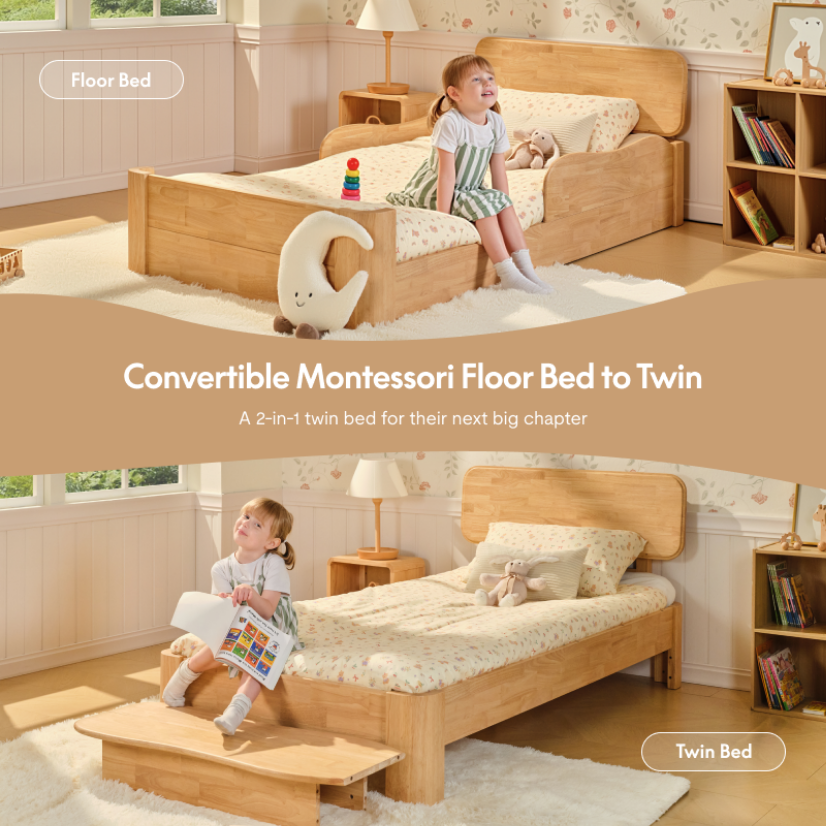
While traditional Montessori floor beds offer a wonderful developmental start, many families face a practical dilemma within a few short years: as the child grows, a basic, fixed floor setup must be entirely replaced. The Flexispot Lumi Evo Kids Bed eliminates this waste through its primary feature—a sustainable, adaptable 2-in-1 convertible design that evolves alongside your child’s physical growth milestones.
- Mode 1: In the initial stages, the bed functions as a low-profile floor sanctuary. Combined with protective rails, it fosters independence, allowing toddlers to safely master their waking routine and explore their room without the risk of falling from heights.
- Mode 2: As your child matures and requires a more traditional sleeping setup, you don’t need to purchase new furniture. The Lumi Evo’s versatile frame converts seamlessly into a structured kids twin bed. This mode accommodates a longer body length and provides greater horizontal space for older children, all while retaining the familiar comfort of their original bed.
By transitioning from a floor bed to an elevated twin bed, this smart 2-in-1 system ensures your investment remains a stable anchor in your child’s bedroom for years, reducing the hassle and cost of frequent furniture replacements.
Movement patterns during early growth
This 2-in-1 flexibility directly aligns with early movement patterns, including rolling, shifting position, and attempts at crawling within the sleep space. A crib limits these actions to a very small area. The Lumi Evo’s floor setup extends that movement into the room itself, once the child is awake. This change affects how often the child practices coordination. They move slowly until an adult approaches, which, over time, helps them understand space boundaries like walls and furniture edges.
Sleep behavior and waking routine
Toddlers’ sleep cycles are short and may involve brief awakenings. In a crib, the moments typically result in calling out. It may be different on an open floor. The child may sit up, look around, or be quiet for several minutes, and then will determine what to do next. This helps to eliminate the abrupt change from sleep to activity. The room becomes a stable reference point. The child begins to view waking as a natural event rather than one requiring adult intervention.
Safety setup and edge protection
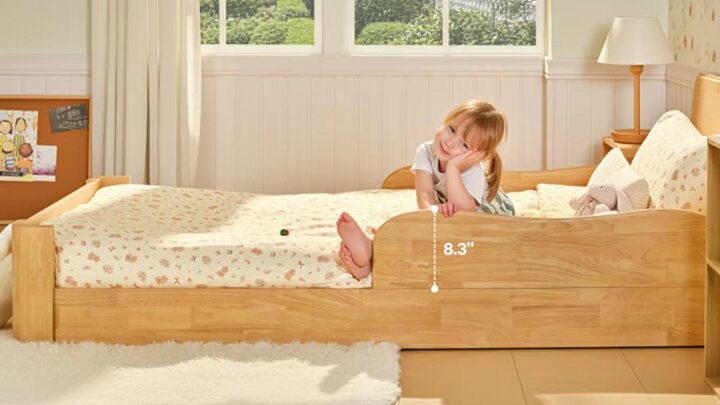
The Montessori floor bed with rails reduces the risk of falls while still keeping the bed accessible from all sides. The low placement means there is no drop from height, and the child can exit without climbing. Small barriers on the sides can help guide sleep position without fully enclosing the space. This reduces accidental rolling out during deeper sleep stages while still allowing easy entry and exit. In practical setups like the Lumi Evo Kids Bed, side support is combined with a low frame to keep movement controlled but not blocked.
Material choices and daily contact
A child’s sleeping surface is used for hours daily, making material choice important for comfort and upkeep. Solid wood frames are common as they stay stable and don’t shift with movement. The solid-wood structure of the Lumi Evo Kids Bed keeps the frame steady when turning or sitting up. Water-based coatings are used on many similar builds to reduce the strong chemical smell during early use. The main function here is consistency rather than appearance, since the bed is in constant daily contact.
Safety structure details
Safety in floor beds is mostly about edges, spacing, and stability rather than height. Rounded corners reduce impact from movement during sleep or play near the bed. Use slats under the mattress to distribute weight evenly and prevent sagging. Lumi Evo Kids Bed has protective side panels, rounded edges, and reinforced slats that support weight without shifting. These elements reduce gaps where limbs could get stuck and keep the mattress level during repeated use.
Sleep environment control
A floor bed works best when the surrounding room is kept safe. This means securing furniture to walls, removing small loose objects, and keeping electrical points covered. The bed itself does not contain the child, so the room becomes the main safety boundary. This setup changes how supervision is handled. Instead of focusing only on the bed area, attention shifts to the full room layout. The child’s movement is not restricted to a single object but is guided by the space’s design.
Independence in daily routine
Over time, children using floor-level sleeping setups begin to handle small routines without help. This includes the times for going to bed, getting up, and leaving the sleep area. Such acts can be accomplished without effort and help to minimize the need to lift or place the child in and out of bed. The Lumi Evo Kids Bed features a consistent design that allows for easy access at bed level while creating a clear sleeping area. The result is a consistent pattern in which the child learns location-based behaviors tied to rest and activity.
Conclusion
A floor-based sleeping arrangement changes more than where a child sleeps. It influences how they sleep, wake, and move in their room during early development. Less confining than a crib, it offers the child more control over movements.
With innovative designs like the Flexispot Lumi Evo Kids Bed, families no longer have to choose between a short-term Montessori phase and long-term practicality. Its 2-in-1 evolutionary design illustrates how a single sleep space can align with a child’s physical development from a toddler floor bed to a classic twin bed fostering lifetime independence without increasing the complexity of everyday life.



 Abbukkhar Kangharnnia
 Gary Cripps
 Dpzhuk Znnkberin