
 Avedyn Phytes
Furniture alone rarely makes a room feel complete. A carpet brings comfort underfoot, and a painted wall brings character and mood without adding clutter. One grounds the space, the other gives the room a visual direction. When the floor and the walls speak to each other even softly, spaces feel calmer, more lived-in, and more intentional.
Balance here doesn’t mean perfect matching. It’s more about a gentle connection of color, texture, and overall feeling. In this blog, we’ll explain how to create harmony in your home by pairing carpets with wall paint in a way that feels natural.
Why Carpets and Painted Walls Work So Well Together
A carpet settles the room and makes it feel warm. A painted wall—especially a feature wall—gives the space an identity. When their tones relate, the room feels less scattered. Instead of too many separate elements fighting for attention, everything rests in a single mood.
1) Start with the Room, Not the Color Chart
Before choosing paint or carpet, step back and look at the room as a whole. Some rooms already carry strong color through furniture, curtains, or decor. Others are quiet and neutral. The carpet and wall paint should respond to what already exists.
If the carpet is patterned or bold, the wall paint can be calmer so the room doesn’t feel heavy. If your walls are already the main statement—like a deep color or textured paint—then a simpler carpet helps the space breathe. The goal is restraint, not competition.
2) Use color Echoes, Not Exact Matches
Exact matching can feel forced. A better approach is to use soft “echoes” of color. For example, a warm beige wall can sit beautifully with a carpet that has sandy or wheat tones. A muted green wall can work with a rug that has olive, sage, or earthy threads hidden inside it.
The secret is to notice undertones. Some whites are warm, some are cool. Some greys lean blue, others lean brown. When the wall and carpet share the same underlying temperature, the room feels naturally balanced—even if the colors are not the same.
3) Let Texture Do Some of the Work
Color gets most of the attention, but texture shapes how a room feels emotionally. A thick wool carpet paired with a smooth matte wall paint creates a cosy, calm feeling. If the wall has texture—like microcement, textured paint, or a limewash finish—then a flatter weave carpet can keep the look clean and modern.
They don’t need to match. In fact, contrast can be beautiful. Soft plush carpeting under a crisp, minimal painted wall adds comfort without disturbing the design. Texture should support the rhythm of the space, not mirror it.
4) Balance Comes from Scale and Placement
A strong feature wall needs visual “weight” on the floor to feel grounded. That doesn’t always mean a bold carpet—sometimes it means a larger one. A small rug with a dramatic wall can feel disconnected, even if the colors look good.
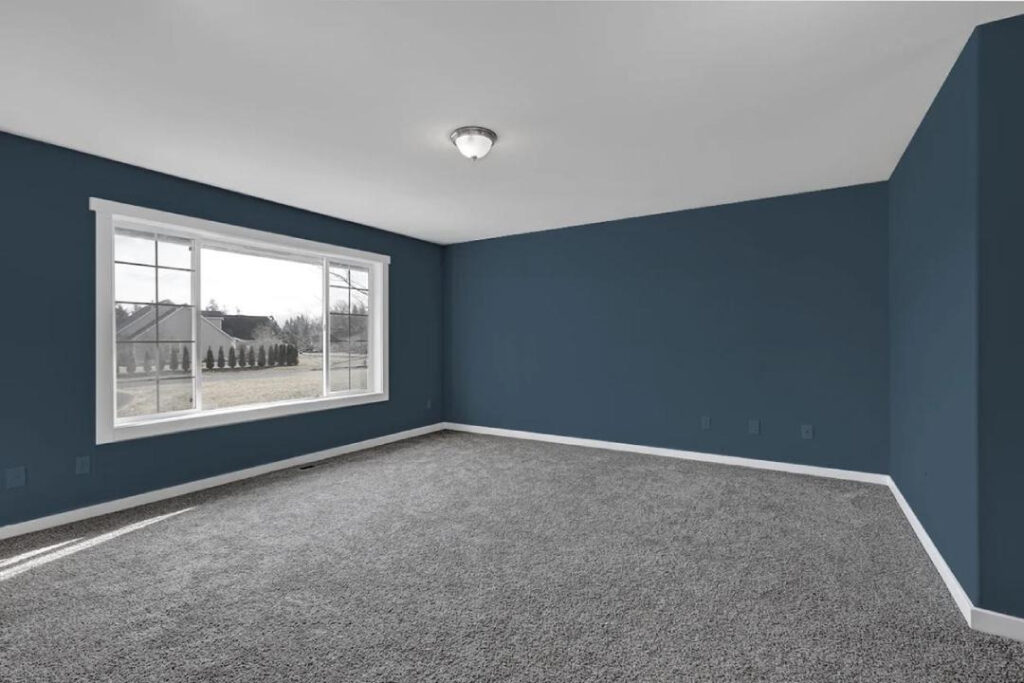
If your wall color is intense, consider a carpet that covers more of the room so the space feels anchored. If the wall color is light and airy, you have more freedom: the carpet can add the main personality without overwhelming the room.
5) When Patterns Meet Paint, Keep One of Them Quiet
Patterned carpets and bold wall painting can work together, but the room can become tiring if both shout. Balance usually comes from choosing one hero.
If your carpet has busy motifs, let the wall paint be calmer—solid, muted, or softly textured. If your wall is the statement (dark color, two-tone paint, geometric painting style, or accent wall), then choose a carpet that feels steady and less detailed. The room will look designed, not crowded.
6) Neutral Carpets Make Strong Walls Look Expensive
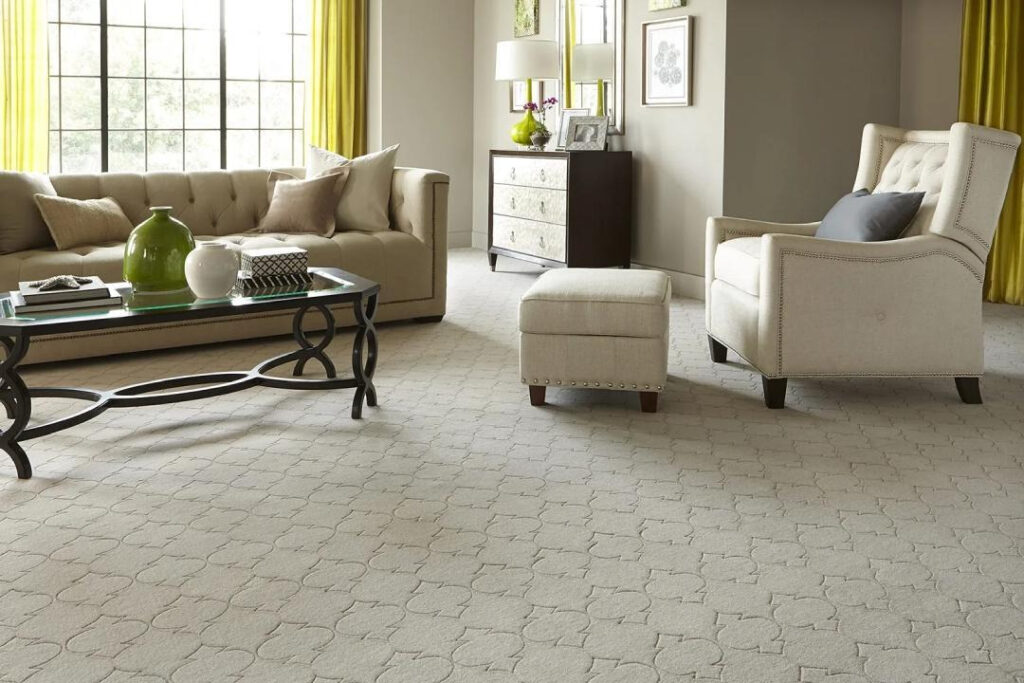
Neutral carpets are often the quiet heroes of decor. A beige, soft grey, or earthy neutral rug allows a painted wall to stand out in a refined way. It also keeps your room flexible—you can change cushions, curtains, or decor later without fighting the floor.
Neutral doesn’t mean boring. A slightly textured wool, a flatweave with subtle variation, or a natural jute-style rug can add warmth and depth even when the color stays calm.
7) Your Comfort Should Lead the Decision
Rules only go so far. Some people love contrast—a dark wall with a light carpet. Others prefer gentle transitions. What matters is how the room makes you feel when you live in it.
Often, a home feels most balanced when it reflects personal taste. Maybe you chose a wall color because it reminds you of a place you love, and the carpet becomes the soft layer that completes that mood. That kind of connection is what makes a space feel real.
8) Small Adjustments Can Change Everything
Balance rarely happens instantly. Sometimes simply shifting the rug slightly, changing the direction of the carpet, or choosing a different paint finish (matte vs satin) makes the whole room click.
Lighting also changes how paint and carpets look. A wall color can appear warmer in evening light and cooler during the day, which can either connect it to the carpet or push it away. Small trials and simple changes often solve what big decisions can’t.
Conclusion
Creating balance with carpets and a painted wall isn’t about strict matching or perfect rules. It’s built through observation, subtle repetition, and comfort with a little imperfection. When the colors feel connected, textures support each other, and scale is considered, the room relaxes into an easy rhythm. The carpet softens the space, the wall paint sets the tone, and together they create a home that feels layered, calm, and quietly complete.

 Abbukkhar Kangharnnia






 Gary Cripps

