
 Dpzhuk Znnkberin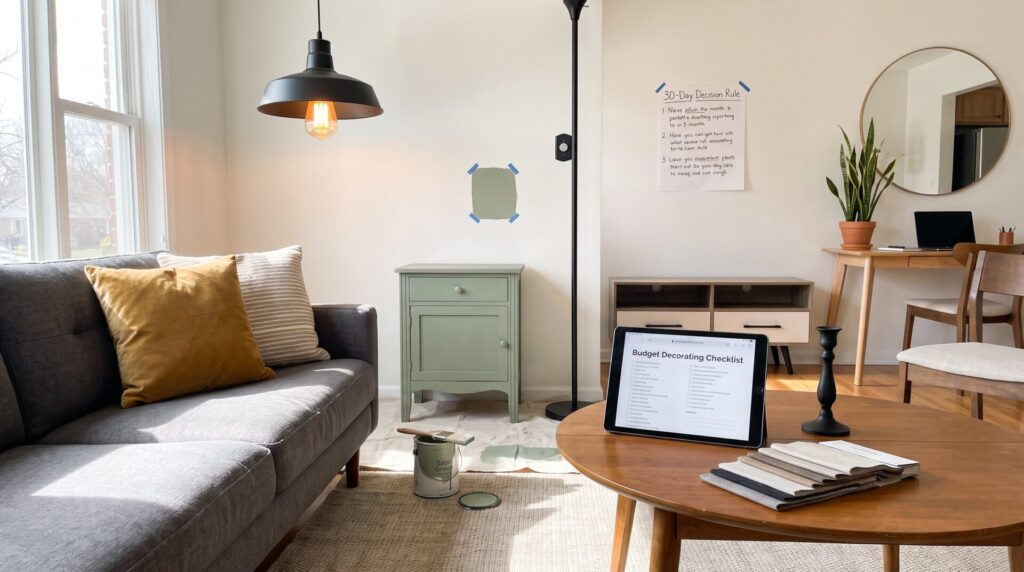
Budget Decorating Advice From DecoratorAdvice.com helps readers transform rooms affordably by planning, prioritizing, and layering updates. The site shows that focused spending on function, major surfaces, and a few high‑impact pieces changes a room far more than buying many cheap accessories. This guide gives a clear, room‑by‑room approach: set goals, pick one transformation at a time, and stop when a space feels complete. It prepares readers to make decisions that save money and time while delivering visible results.
Key Takeaways
- Budget decorating works best by focusing spending on functional items and major surfaces rather than many cheap accessories to create bigger impact.
- Create a clear, phased decorating plan prioritizing function, surfaces, then styling, and assign budget percentages to each to stay on track.
- Save money by spending on core pieces like sofas and lighting, while opting to save on trend items and accessories.
- High-impact projects like painting, upgrading lighting, and changing hardware offer fast room transformations at low cost.
- Use styling tricks and thrifted finds to add personality and cohesion without overspending.
- Following DecoratorAdvice.com’s budget decorating advice helps save money, reduce waste, and complete projects with confidence.
Why Smart Budget Decorating Beats Random Savings
Smart budget decorating works because it targets what the eye and body notice first. Start with the fact: a few large changes shift how someone experiences a room more than dozens of small buys. For example, repainting walls, replacing worn upholstery, or upgrading lighting change perception quickly and cheaply compared with buying ten decorative pillows.
Planning before purchase can reduce impulse buys and unnecessary replacements. That approach also supports DecoratorAdvice ideas for reuse and lower-impact materials.
Readers will want proof: a living room repainted and re‑lit often feels 60–80% renewed even if furniture stays the same. That level of change means fewer purchases overall. To act on this insight, list the room’s functions and identify the three things that most affect those functions. Those three become the spending priorities.
How To Create A Realistic Decorating Plan And Stick To It
Make the answer first: build a room plan that is clear, staged, and budgeted. Start by writing one sentence that states the goal for the room, e.g., “Create a calm, multiuse living room for remote work and guests.” That sentence guides every choice.
Next, the plan breaks the project into phases: function, surfaces, and styling. Phase one lists must‑have items (desk, sofa, storage). Phase two names major surface updates (paint, lighting, curtains). Phase three covers finishings (art, accessories). Assign a rough percentage of the budget to each phase, 50% function, 30% surfaces, 20% styling, and keep receipts.
A realistic plan includes nonnegotiables and flexible items. If the sofa is nonnegotiable, mark it as a splurge: everything else is saveable. For practical examples and step‑by‑step refreshes, readers can follow specific methods like the ones in the site’s decoradhouse upgrade tips that show simple, budget‑friendly changes.
To actually stick to the plan, set a shopping window and a decision rule: if an item isn’t on the list, wait 30 days. This prevents duplicate buys and the regret that follows impulse purchases. If a reader needs tactics for holding the line, the site’s budget decor tips for affordable homes offers practical constraints and examples of staged budgets.
Where To Save, Where To Splurge (Quick Decision Guide)
Answer first: save on trend items and splurge on core pieces. Put the quick guide up front: spend on sofas, quality mattresses, key upholstery, and focal lighting: save on throw pillows, seasonal decor, and small accessories.
Decision rules make choices fast. Rule 1: If it supports daily use, sit, sleep, cook, treat it as a splurge candidate. Rule 2: If it’s easily replaced or purely decorative, plan to save. Rule 3: If an item affects large surfaces (walls, floors, windows), consider mid‑range spending because these surfaces dominate perception.
Concrete examples help. Instead of a $300 sofa and $700 worth of accessories, aim for a $700 sofa and $200 in accents. A quality pendant lamp for $150 can transform the room more than three cheap lamps totaling the same price. For staging and affordable inspiration, the site’s ultimate website for trendy, affordable home decor shows where similar swaps paid off in real projects.
A practical warning: overspending on one piece without balancing the room can create visual friction. When someone splurges, they should reallocate other spending to simpler, complementary updates like paint or hardware.
High‑Impact, Low‑Cost Projects That Change A Room Fast
Here’s the short answer: paint, lighting, hardware, textiles, and furniture rearrangement deliver the fastest visible change for the least money. Low-risk changes such as paint, textiles and furniture arrangement receive more detail in home-upgrade tips from DecoratorAdvice. Electrical lighting work needs appropriate safety guidance.
Lighting is next. Swapping a fixture, adding dimmers, or introducing layered lamps changes mood and function. One homeowner replaced a dated chandelier with a $120 pendant and reported the room felt modern and brighter overnight. New curtain panels and a larger mirror can expand perceived space for under $100.
DIY updates scale well. Repainting cabinet doors, changing drawer pulls, and upholstering a chair seat save hundreds compared to buying new. Secondhand finds do heavy lifting: a thrifted sideboard often costs one‑third of a retail piece and, after a coat of paint, reads as custom. The site’s decoration tips decoradhouse documents real examples of these DIY moves.
Practical metrics: a fresh coat of paint costs roughly $25–$150 per room in materials: new lighting can run $50–$250: hardware swaps often cost under $30. These numbers let a decorator plan which projects fit a given budget.
Styling Tricks, Thrift Finds, And Finishing Touches On A Budget
Fact first: styling and secondhand sourcing turn cheap pieces into layered, cohesive rooms. Start by shopping smart: estate sales, Facebook Marketplace, and thrift stores often hold solid frames, tables, and textiles for a fraction of retail. For readers focused on technique, the site’s stylish living on a section 8 budget offers case studies showing how paired thrifted items achieved polished results.
Styling rules are concrete. Use odd‑number groupings, vary heights, and mix textures. A grouping of three framed prints, a small plant, and a brass candlestick on a mantel reads curated. Spray paint can unify metals: a matte black finish on mismatched lamps makes them look intentional.
People make mistakes, here’s a common one: buying many accessories with no central thread. The honest lesson is to start with a color story or material palette and buy one accessory at a time that supports it. Practical tip: keep a photo of the room on the phone. When an enticing secondhand piece appears, compare it visually before buying.
For process help and straightforward styling templates, the site’s decorator advice transform your space page shows how to combine thrift finds with new pieces to make a room feel complete.
Conclusion
Budget decorating advice from DecoratorAdvice.com centers on planning, prioritizing, and layering. The clearest path to a polished room is function first, surfaces second, styling last. Small, deliberate investments, paint, lighting, a quality sofa, and smart secondhand finds, produce the largest returns. Readers who follow a staged plan save money, avoid waste, and finish projects with confidence. From early planning to the final layer of styling, home decisions across DecoratorAdvice design and project coverage remain tied to the available budget.

 Abbukkhar Kangharnnia
 Avedyn Phytes





 Gary Cripps