
 Dpzhuk Znnkberin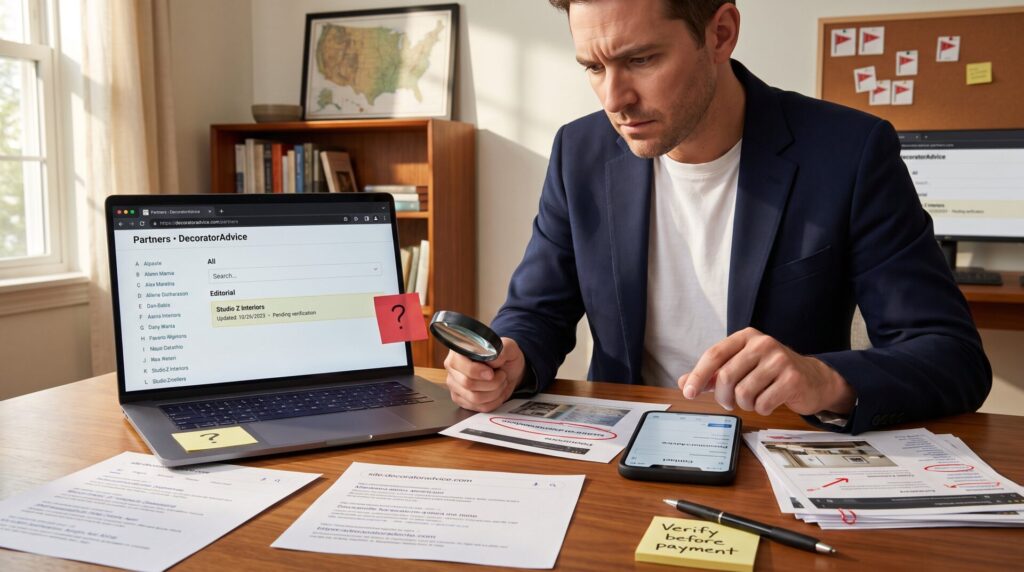
How to Find the Official DecoratorAdvice Partner Information is a practical guide readers use when verifying collaborations and contact details on DecoratorAdvice. It explains where official listings appear, how to confirm a partner’s status, and the concrete steps to locate verified contact details. This piece focuses on quick, secure actions a reader can take today, no fluff, just exact pages, red flags, and next steps when something looks off.
Key Takeaways
- DecoratorAdvice lists official partners on dedicated pages like “Partners” or “Meet Our Partners” within its domain decoratoradvice.com.
- Verify a partner by confirming their name and contact details on official DecoratorAdvice partner pages and checking domain ownership matches the publisher.
- To locate partner details, navigate the site from home to Partners pages, or use site-specific search queries with the partner’s name.
- Be cautious of fake listings on mimic domains or pages missing from the official partner or About sections; look for inconsistent contact info or suspicious domains.
- If partner information seems fraudulent or missing, immediately contact DecoratorAdvice through their official channels before proceeding with any transactions.
- Always seek written confirmation from DecoratorAdvice staff to avoid scams and ensure trust when dealing with partners listed as official.
Where DecoratorAdvice Publishes Official Partner Listings
DecoratorAdvice publishes official partner listings on dedicated partner pages and within the site’s About sections. The fact: most verified partners appear on pages titled “Partners,” “Meet Our Partners,” or similar partner overview pages hosted on decoratoradvice.com. Readers searching for a brand or designer will often find a concise entry with the partner’s name, short bio, and link to their site.
Concrete examples: pages such as the site’s partner overview and “the-decoratoradvice-partners” pages list vetted collaborators and editorial partners. These pages are updated when DecoratorAdvice signs new collaborations, so a recent timestamp or editorial note often accompanies entries. If a partner claim lacks presence on these pages, it likely isn’t official.
Practical tip: when checking a claimed partner, open the site’s About pages and site footer first, DecoratorAdvice often mirrors partner summaries there. For additional context about how these collaborations work, consult the site’s pillar article on partner relationships in the network: partner guide.
How To Verify A Partner On DecoratorAdvice.com
Answer: verify by confirming the partner’s name on an official partners page and checking domain ownership. Step one: search the partner’s exact name in DecoratorAdvice’s site search or use a site-specific search in a search engine (e.g., site:decoratoradvice.com “Partner Name”). Step two: confirm the listing is hosted under a DecoratorAdvice domain (decoratoradvice.com or decorator-advice.com), not an unrelated site that imitates the brand.
Concrete checks: look for matching contact details, an editorial note or author credit linking the partner to an article, and a timestamp or update line. Cross-reference the listing against the site’s About or partner-network descriptions: real partners usually show up in both places. If the entry includes an email, compare it to DecoratorAdvice’s published contact channels to ensure consistency.
Example: a collaborator listed on the partners overview and then named in an editorial feature with the same contact email is a stronger verification than a standalone page. For guidance on partnership types and expectations, a short reference that helps is the article on affiliate differences.
Step‑By‑Step: Locating Partner Details On The Site
Direct answer: follow a three-click path, home → Partners or Meet Our Partners → partner entry. First, open DecoratorAdvice’s homepage and use the main navigation to reach headings labeled Partners or Meet Our Partners. Second, scan the alphabetized lists or tables for the partner’s name. Third, open the partner record and note the published contact info and links.
Specific method: if the navigation doesn’t show a Partners link, use the site search query “partners decoratoradvice.com” or the partner’s full name. Readers often find partner entries embedded in roundups or editorial pages: verify those entries against the partner overview page. When a partner entry links back to a business page or social profile, ensure that link leads to the same entity listed on DecoratorAdvice.
Concrete scenario: a reader searching for “Studio Verde” types the designer name into site search, finds a feature story and a partners table, and matches the email listed in both places. That confirms the relationship. For a focused primer on pitching and partner selection processes, consult the short guide on how designers pitch collaborations: designer pitch tips.
Red Flags: How To Spot Imposters And Fake Listings
Clear insight: fake listings often live on mimic domains or on pages that don’t appear in DecoratorAdvice’s official partner lists. Red flag 1, the domain contains extra letters, strange TLDs, or a hyphen that doesn’t match documented DecoratorAdvice addresses. Red flag 2, a partner claims status but does not appear on the partners or About pages.
Specific examples: a site copying the DecoratorAdvice layout but hosted on decoratoradvice-partners.xyz or a page that lists a partner with an email at a free webmail provider instead of a business address. Another common tell: contact details that contradict email addresses or phone numbers on DecoratorAdvice’s published contact pages.
How to act: hover over links to confirm the target domain, check the page’s footer for a DecoratorAdvice copyright and site map, and compare the contact block to the publisher’s public contact page. For context on realistic partnership structures and why fraudulent claims happen, the comparison article about partnership types helps explain motives: partnership types.
What To Do If You Can’t Find Partner Info Or Suspect Fraud
Immediate step: contact DecoratorAdvice and request confirmation before sharing money or sensitive documents. If a partner cannot be found on official listings, readers should capture the suspicious page (screenshot and URL) and send it to DecoratorAdvice’s published contact channels requesting verification.
How to contact: use the site’s official contact pages to submit the inquiry and attach proof. DecoratorAdvice maintains clear contact routes for verification and editorial questions. If the claim involves payment or contractual terms, pause and ask for explicit, written confirmation from DecoratorAdvice staff. Independent validation sites and domain registration lookups can also confirm whether the hosting domain belongs to the publisher.
Concrete safeguard: avoid wiring funds or giving bank details until DecoratorAdvice replies. For direct contact options, the site’s support page lists email and form channels that readers can use to reach the team. A related resource that guides readers to contact the publisher directly is the Contact page: contact options.
Conclusion
Key takeaway: use DecoratorAdvice’s official partner pages, About sections, and contact channels to verify partnerships. When in doubt, stop and ask the publisher for written confirmation. That single step prevents costly mistakes and preserves trust between brands and designers.


 Abbukkhar Kangharnnia
 Avedyn Phytes
 Gary Cripps


