
 Dpzhuk Znnkberin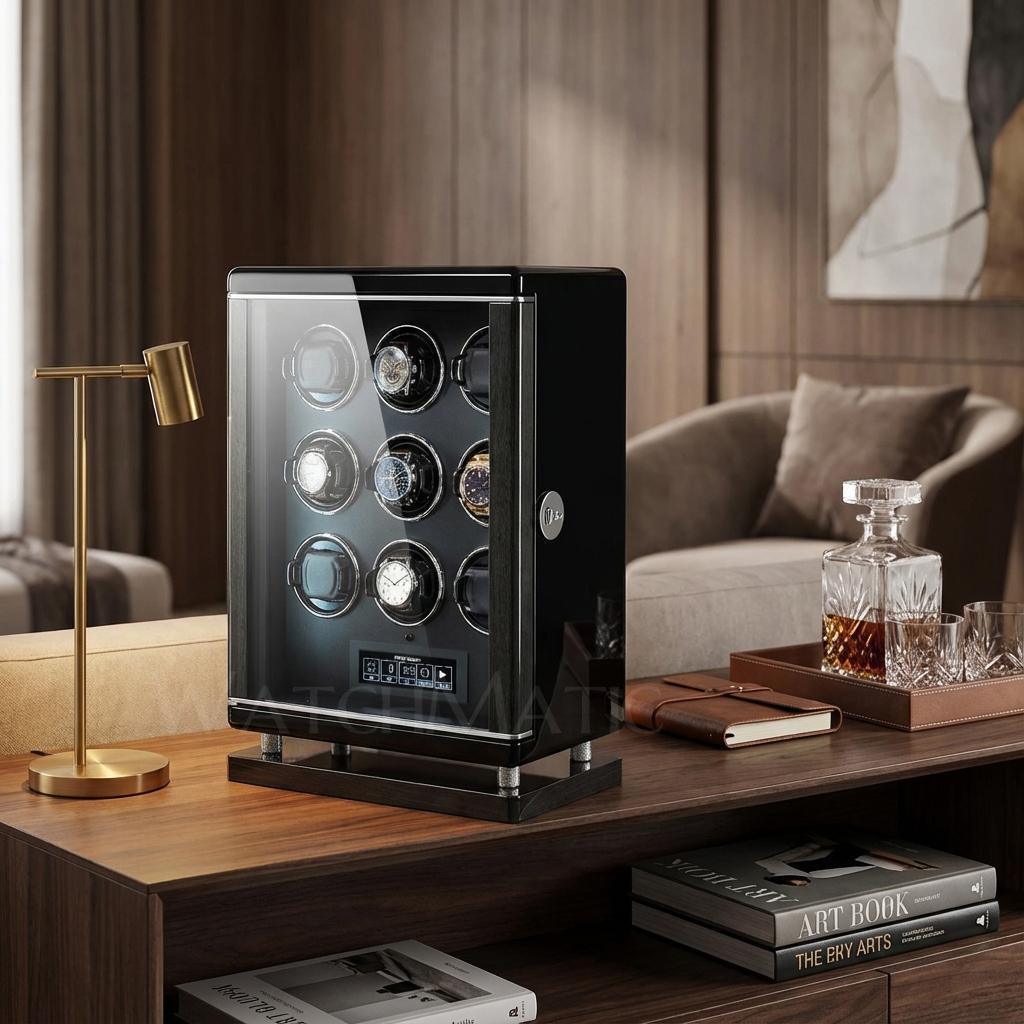
A watch collection rarely stays just a collection for very long.
As the number of watches grows, so does the question of where they should live. A drawer may work for a few pieces. A watch box can keep things organized. But for collectors who spend years building a collection, storage eventually becomes part of the room itself.
That is where the watch winder is finding a new role.
Once viewed primarily as a practical device for keeping automatic watches running, the watch winder is increasingly being incorporated into dressing rooms, studies, walk-in closets and private collection spaces. Rather than something to hide away, it can become part of the furniture, alongside cabinetry, lighting and other details that define the character of a room.
When Watch Storage Becomes Part of the Room
Good interior design is often about making practical things feel natural.
A built-in wardrobe stores clothing without calling attention to itself. A bookshelf can become an architectural feature. Even a desk, when properly designed, can feel like it belongs to the room rather than simply occupying it.
Watch storage can work in much the same way.
For a collector, the question is not only how many watches can be stored, but how the collection fits into everyday life. A watch winder placed within a dressing room, for example, can sit alongside drawers for straps and accessories. In a study, it can become part of a larger cabinet. In a dedicated collection room, it can sit beneath carefully considered lighting and become part of the display.
The practical function remains important. But it no longer has to dictate the appearance of the space.
The Watch Winder as Part of the Collecting Ritual
There is something inherently personal about choosing a watch.
Collectors often remember why they bought a particular piece, where they found it, or what was happening in their lives at the time. Opening a cabinet in the morning and seeing several watches arranged together can therefore be more than a storage routine.
It is part of the pleasure of collecting.
For automatic watches, a watch winder can also make that routine more convenient. By rotating a watch according to its appropriate winding settings, it helps keep the movement running when the watch is not being worn.
For someone with several automatic watches, that small convenience can make a noticeable difference. A watch can be ready to wear rather than waiting to be reset after spending time in storage.
The best watch storage therefore serves two purposes at once: it takes care of the collection, and it makes living with the collection more enjoyable.
Designing Around the Collection
No two collections are quite alike.
One collector may prefer a small selection of understated watches. Another may have spent decades assembling pieces across different eras, brands and complications. Their storage needs will be very different, as will the rooms in which those watches are kept.
This is where personalization becomes important.
Wood finishes can echo existing cabinetry. Leather can add warmth to a dressing room. Dark lacquer can suit a more contemporary interior, while lighter finishes can disappear into a neutral palette.
The internal arrangement matters too. Watch winders, drawers, trays and accessory compartments can be organized around the way the collection is actually used.
Instead of choosing a cabinet first and figuring out where everything will go afterwards, the space can be designed around the collection itself.
That approach is particularly effective in bespoke interiors, where cabinetry and storage are considered from the beginning rather than added as an afterthought.
Materials, Proportion and Light
A functional object can look surprisingly different depending on the materials around it.
Place a watch winder inside a plain utility cabinet and it will naturally read as equipment. Give it a carefully finished wood exterior, proportion it alongside surrounding furniture and introduce subtle lighting, and it begins to feel like something else entirely.
Material is part of that transformation.
Natural wood brings texture and warmth. Leather introduces a softer, tactile quality. High-gloss finishes can make a cabinet feel more architectural. Neutral colors can allow the watches themselves to become the focus.
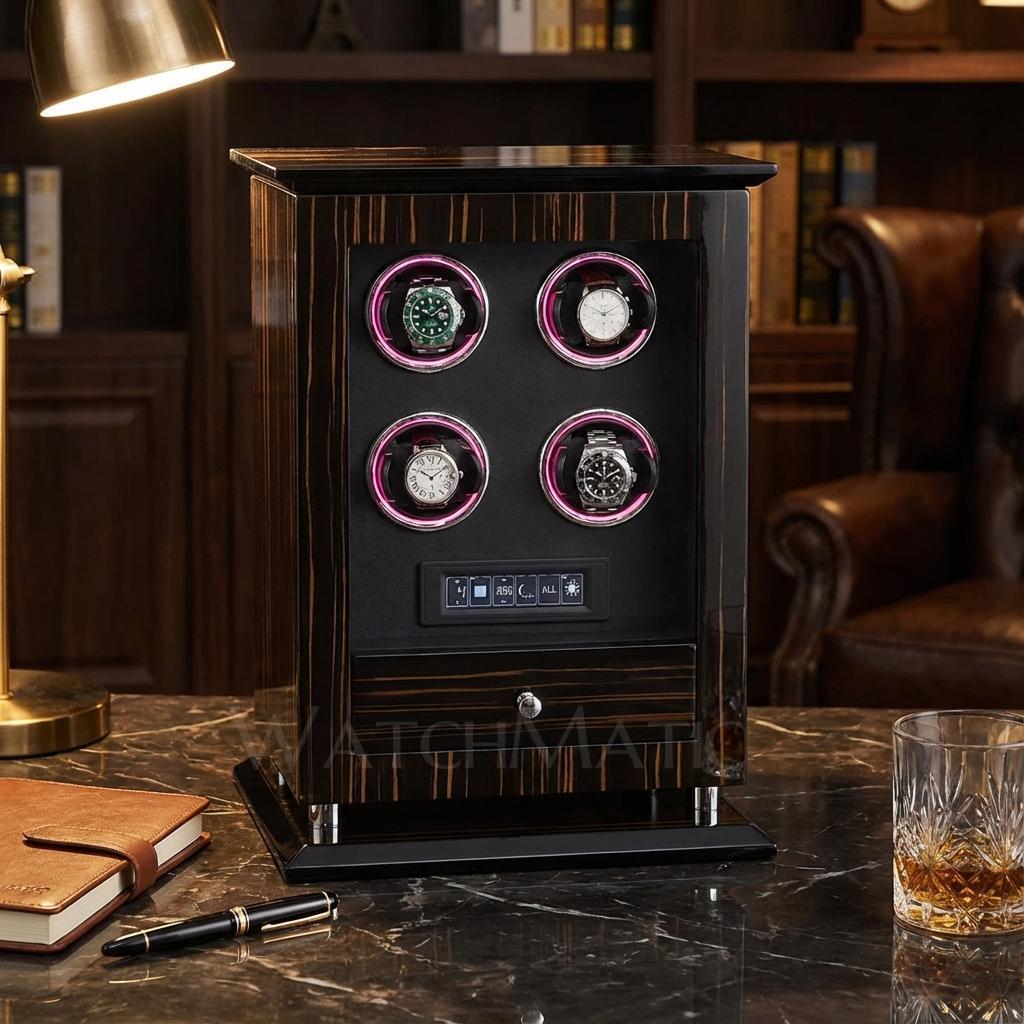
Proportion is equally important. A cabinet that is too large can dominate a room, while one that is too small may look disconnected from the furniture around it.
These details are easy to overlook, but they are often what make a storage piece feel as though it was designed for the room rather than simply placed inside it.
Technology That Knows When to Stay Quiet
The technology inside a modern watch winder can be quite sophisticated, but there is little reason for all of it to be visible.
Quiet motors, adjustable winding settings and integrated lighting can perform their jobs without becoming the visual focus. In a well-designed interior, technology tends to work best when it disappears into the experience.
This is particularly relevant in bedrooms, dressing rooms and private studies, where the atmosphere of the room matters as much as its functionality.
The goal is not to make the watch winder look technological.
The goal is to make it work beautifully.
From Storage to Display
As collections become more personal, the boundary between storage and display becomes less obvious.
A watch can be protected without being hidden. A cabinet can provide organization without looking purely utilitarian. And a watch winder can keep an automatic movement running while also giving the collector an opportunity to see the collection at a glance.
This changes the way the space is experienced.
Instead of opening a drawer and finding one watch at a time, a collector may be able to see several pieces together, each occupying its own place within the room. Lighting, materials and the arrangement of the watches can turn a functional cabinet into something closer to a private display.
It is a subtle distinction, but an important one.
The collection is no longer simply being stored. It is being lived with.
A More Personal Approach to Luxury Storage
This shift is part of a wider change in how people think about luxury interiors.
The most successful spaces are rarely the ones filled with the most expensive objects. They tend to be the ones where everything has a reason to be there, and where practical needs have been considered alongside visual balance.
For watch collectors, that means storage can be designed with the same care as the rest of the home.
Brands such as WatchMatic are exploring this approach through watch storage systems that combine winding functionality with considered materials, integrated lighting and personalization. The emphasis is not simply on keeping watches protected, but on creating a place where a collection can naturally become part of everyday life.
For collectors interested in exploring this idea, WatchMatic’s watch winder collection offers examples of how winding functionality can be incorporated into purpose-built watch storage.
The Future of the Watch Winder
The watch winder may have started as a practical solution to a very specific mechanical need. Its place within the modern home, however, is becoming much broader.
As collectors think more carefully about how their watches are stored and experienced, the watch winder can become part of a larger interior language—one built around cabinetry, materials, light and personal taste.
The result is not about making a storage cabinet more luxurious for the sake of it.
It is about recognizing that the things we use every day deserve to belong in the spaces we have carefully created for ourselves.
For a serious collector, that may mean the watch winder is no longer something to hide away.
It can simply be another piece of the room.

 Gary Cripps

 Abbukkhar Kangharnnia


 Avedyn Phytes


