Gary Cripps
Roman shades look and perform very differently depending on the fabric you choose. The five most popular and practical options are linen, cotton, linen blends, polyester, and sheer fabrics. Roman Shades can be motorized with remote control, voice assistant or app.
1. Linen Roman Shades
Linen gives roman shades a natural, high‑end, slightly relaxed look that works beautifully in living rooms, dining rooms, and bedrooms. It holds pleats well, softens over time instead of wearing out, and suits both modern and classic interiors.
2. Cotton Roman Shades
Cotton is a versatile, medium‑weight fabric that is often recommended as a “workhorse” for roman shades. It is easier to care for than many naturals, comes in endless prints and colors, and works well for kitchens, kids’ rooms, and everyday spaces.
3. Linen Blend Roman Shades
Linen blends (linen + cotton, linen + viscose, etc.) keep the natural texture of linen but crease less and are usually more dimensionally stable. They are a great middle ground if you want the linen look, but slightly easier care and often a better price.
4. Polyester Roman Shades
Polyester and polyester blends are durable, moisture‑resistant, and less prone to shrinking, which makes them ideal for kitchens, bathrooms, and high‑traffic rooms. They are often used for blackout and thermal roman shades and tend to be more budget‑friendly.
5. Sheer Roman Shades
Sheer fabrics (lightweight linen, voile, and other semi‑transparent weaves) create soft, airy roman shades that gently diffuse daylight while adding privacy. They are perfect for bright living areas and kitchens, and can be layered with blackout rollers or curtains in bedrooms.
Where to Purchase Roman Shades?
The simplest way to buy the right roman shades fabric is to visit a Blinds To Go store near you, where you can see fabrics in person, feel their weight and texture, and get help matching them to your room and light conditions.
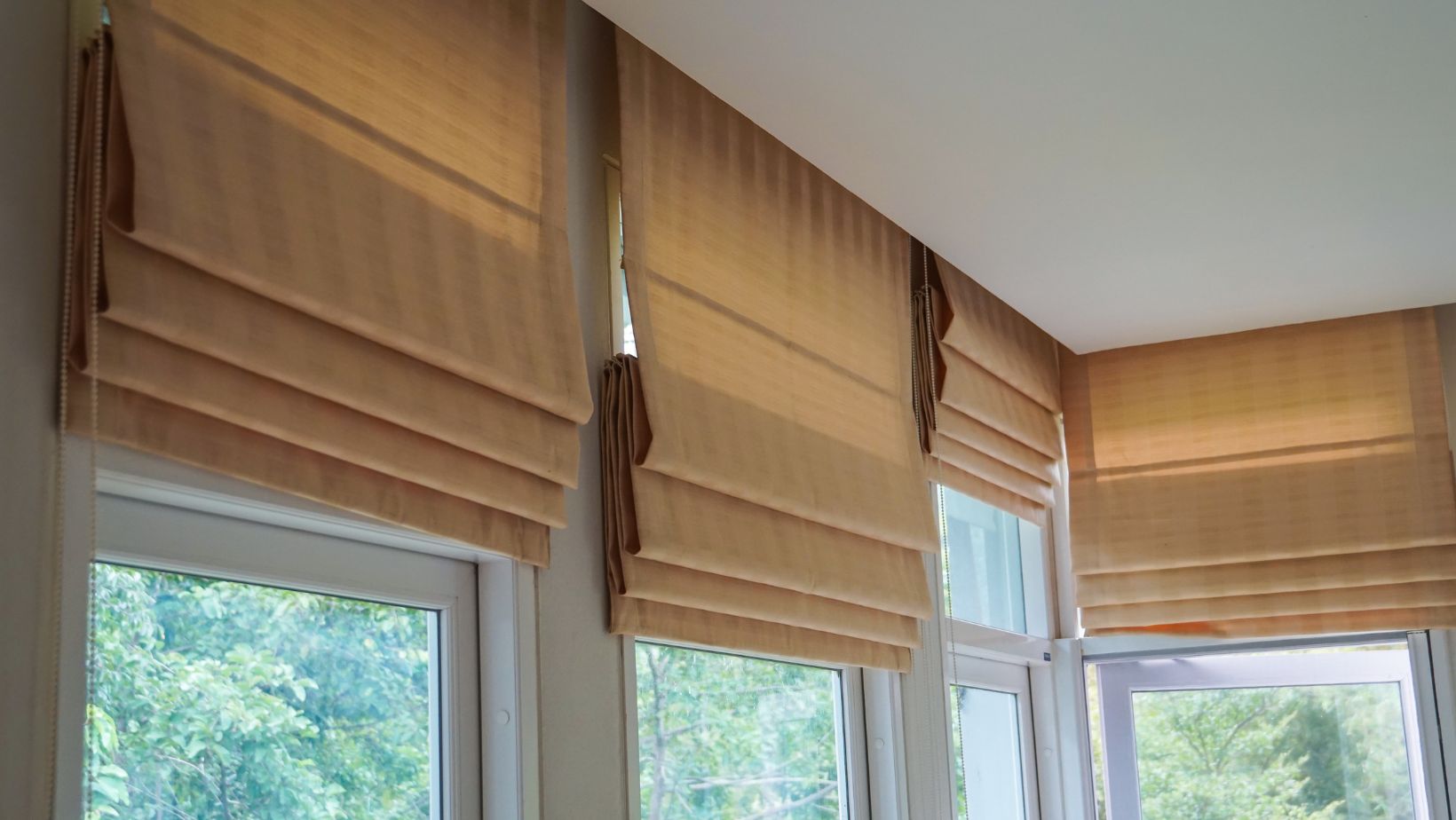
You can find both motorized and black out options, choose roman shades in the store or ask for in-home window treatment consultation.
Perfect Place For Roman Shades
The most popular places for roman shades are living rooms, dining rooms, kitchens, and bedrooms, but they work best where you want softness without heavy drapery. In living and dining rooms, roman shades add tailored fabric and texture while still looking clean and modern. In kitchens, they are ideal for windows above sinks or counters, where full‑length curtains would be impractical. In bedrooms, roman shades work beautifully when you combine a decorative fabric shade with blackout lining or an additional blackout layer for better sleep. They are also great for small spaces, like home offices, where you need privacy and light control but don’t want to visually “shrink” the room with bulky curtains.