Gary Cripps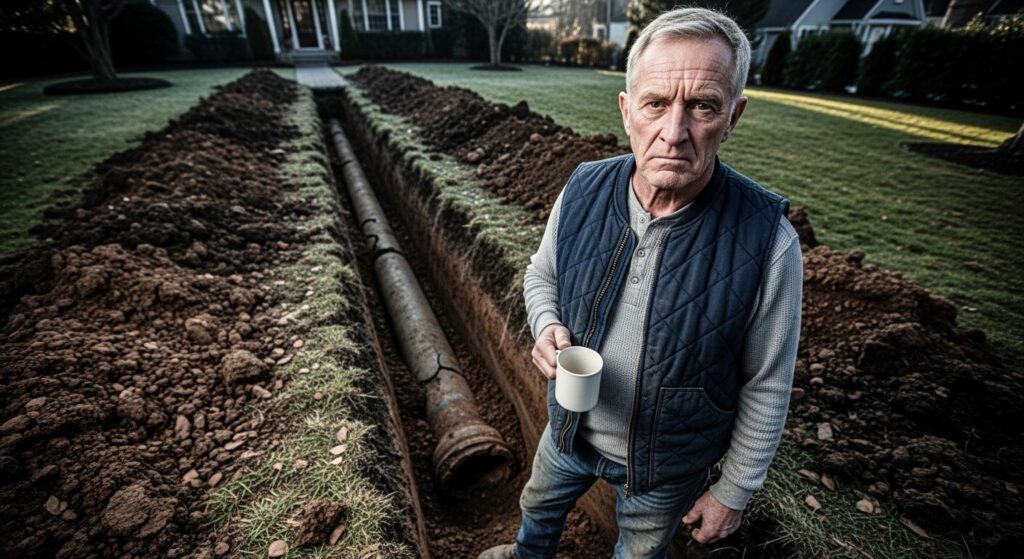
You hear a gurgling sound from your toilet. Your kitchen sink drains more slowly than it used to. These aren’t just minor annoyances; they can be the first whispers of a subterranean problem that’s silently growing under your property. For millions of American homes built during the post-war boom, the sewer lines that have worked reliably for decades are now reaching the end of their functional life.
This hidden infrastructure is quickly becoming a costly crisis, catching unsuspecting homeowners off guard with sewage backups, ruined landscapes, and repair bills that can run into the tens of thousands. This is not a localized issue; the risk of aging pipes caving in is considered extremely serious in cities worldwide. Understanding why this is happening—and what you can do about it—is the key to protecting your home and your finances from a disaster you never see coming.
The Ticking Time Bomb: Why Older Sewer Lines Are Failing
The pipes buried beneath your yard weren’t made to last forever. The materials used decades ago are now showing their age, making them vulnerable to a host of environmental stressors that lead to failure.
What Are Old Sewer Pipes Made Of?
Pipes installed from the 1940s to the 1970s were typically made from materials like cast iron, vitrified clay, and even tar-paper composite (known as Orangeburg pipe). Each of these materials has inherent vulnerabilities that emerge over time. Cast iron rusts and corrodes from the inside out, while brittle clay pipes are highly susceptible to cracking and root intrusion at their joints. With the average age of homes in the U.S. now over 40 years, millions of properties fall squarely into this high-risk category.
For homeowners in older neighborhoods, arranging a professional inspection can identify hidden stresses on your system before they lead to a catastrophic and costly failure. Trusting a company with over four decades of local experience ensures a thorough and accurate assessment. For those in the area, specialized sewer and septic services can provide professional diagnostics and peace of mind.
Common Causes of Sewer Line Failure
A sewer line failure is rarely a sudden event; it’s typically the result of years of cumulative stress from multiple factors working against an aging system.
- Aggressive Tree Root Intrusion: Thirsty tree roots are naturally drawn to the moisture and nutrients inside sewer lines. According to reports, this problem is especially common during dry weather, as roots seek water sources and can penetrate even tiny cracks, eventually expanding to block or completely break the pipe.
- Corrosion and Deterioration: Cast iron pipes, once a standard, have a finite lifespan of 50-70 years. Over decades, they rust and corrode from the inside, thinning the pipe walls and leading to cracks, leaks, and eventual collapse.
- Ground Shifting and Settling: Soil movement from freeze-thaw cycles, prolonged drought, heavy rains, or nearby construction can put immense pressure on rigid pipes. This instability can cause pipes to crack, separate at the joints, or lose their proper downward slope for waste to flow, and in extreme cases, lead to dangerous sinkholes under properties.
- Pipe Sagging (Bellies): Over time, sections of a sewer line can sink into the soil, creating a low point or belly. This dip collects waste, toilet paper, and debris, forming persistent clogs that place continuous strain on the pipe, often leading to a total collapse.
- Material Breakdown: Certain inferior materials, like Orangeburg pipe, were used extensively in post-war construction until the early 1970s. Made from wood pulp and tar, these pipes absorb moisture, deform under soil pressure, and eventually disintegrate completely.
Sewer Pipe Material Lifespan Comparison
| Pipe Material | Typical Lifespan | Common Failure Points | Used Primarily In |
|---|---|---|---|
| Cast Iron | 50 – 100 years | Corrosion, rust, cracking | Homes built before the late 1970s |
| Vitrified Clay | 50 – 100+ years | Root intrusion at joints, cracking under pressure | Older homes, common until the 1980s |
| Orangeburg | 30 – 50 years | Blistering, flattening under soil pressure, disintegration | Homes built from the 1940s to early 1970s |
| PVC / ABS | 100+ years | Cracking from improper installation or extreme soil shifts | Modern homes since the 1970s/1980s |
The High Cost of a Catastrophe: Financial & Health Risks
When a sewer line fails, the consequences extend far beyond a simple plumbing bill, often leaving residents extremely distressed. The financial and health-related fallout can be devastating for homeowners who are often unprepared for the scale of the disaster.
The Financial Fallout of a Sewer Backup
The cost of a sewer line failure is multifaceted. According to FEMA, just one inch of water or sewage can cause over $25,000 in damage to a home’s structure, flooring, furniture, and personal belongings. While some homeowners’ insurance policies offer riders for water damage, the average claim payout is approximately $11,098, and many policies explicitly exclude coverage for sewer line failures that originate outside the home’s foundation. This leaves homeowners responsible for the entire bill, a situation becoming more common as infrastructure ages. The average cost to fully repipe a house is around $7,500, but an emergency sewer line replacement requiring extensive excavation can easily exceed that, not including landscaping restoration. In some municipalities, homeowners can even be fined by the city for the resulting health hazard caused by leaking sewage.
More Than a Mess: The Hidden Health Hazards
A residential sewer backup is not just a messy inconvenience; it is a serious biohazard that poses significant health risks. Raw sewage is teeming with harmful pathogens, including dangerous bacteria like E. coli and Salmonella, viruses, and parasites. Exposure to these microorganisms can cause severe gastrointestinal illnesses and other infections. Beyond the immediate threat, the moisture from a backup creates the perfect environment for toxic mold to grow within walls, under flooring, and inside HVAC systems. This mold can lead to chronic respiratory issues, allergies, and other long-term health problems, making professional, certified cleanup an absolute necessity.
Modern Solutions: Repairing Lines Without Ruining Your Yard
Fortunately, technology has advanced significantly, offering homeowners powerful and minimally invasive options to fix aging sewer lines without destroying their property in the process.
From Trenches to Technology: The Old Way vs. The New
The traditional method of sewer line repair involved digging a deep, wide trench from the house to the street connection. This approach inevitably destroyed lawns, gardens, driveways, and patios, leaving homeowners with a massive restoration project and associated costs on top of the pipe repair itself. Today, trenchless technology has become a game-changer and a key trend in the industry, allowing for repairs to be made with little to no excavation.
Understanding Trenchless Repair Options
Trenchless sewer repair offers two primary methods that can solve most pipe problems without turning a yard into a construction site.
Pipe Lining (CIPP): Also known as Cured-in-Place Pipe (CIPP), this method involves inserting a flexible, resin-saturated liner into the damaged pipe. The liner is filled with air, pressing it against the walls of the old pipe. The resin then hardens, effectively creating a brand new, seamless, and durable pipe inside the original one. This solution is ideal for pipes with cracks, leaks, or root intrusion that are still structurally intact.
Pipe Bursting: For pipes that are collapsed, severely broken, or have sagged, pipe bursting is the preferred method. In this process, a new, high-density polyethylene pipe is pulled through the old line by a hydraulic machine. A bursting head attached to the front of the new pipe fractures the old, damaged pipe outward into the surrounding soil, simultaneously laying the new pipe in its place.
The First Step: A Professional Camera Inspection
No repair should ever begin without a precise diagnosis. A professional sewer camera inspection is the only way to be certain about the cause, location, and extent of the problem. A plumber feeds a high-resolution camera into the sewer line, providing a real-time video feed of the pipe’s interior. This technology is crucial for preventing unnecessary work and ensures the correct repair method is chosen. As recent incidents have shown, it is vital to identify the exact cause of damage, whether it’s from simple aging or external factors like a boring company accidentally drilling through the line.
Protecting Your Home: Proactive Steps for Sewer Line Maintenance
The thought of a sewer line failure is daunting, but ignoring the reality of aging infrastructure is a risk few homeowners can afford to take. The pipes installed over half a century ago were not designed to last forever, and their gradual decay is an inevitable part of a home’s lifecycle. By understanding the materials beneath your lawn, recognizing the early warning signs, and knowing that modern trenchless technologies exist, you can shift from a reactive to a proactive mindset.