Building a Barndominium in Western Canada: Costs, Design Options and What You Need to Know
 Nophyn Tesil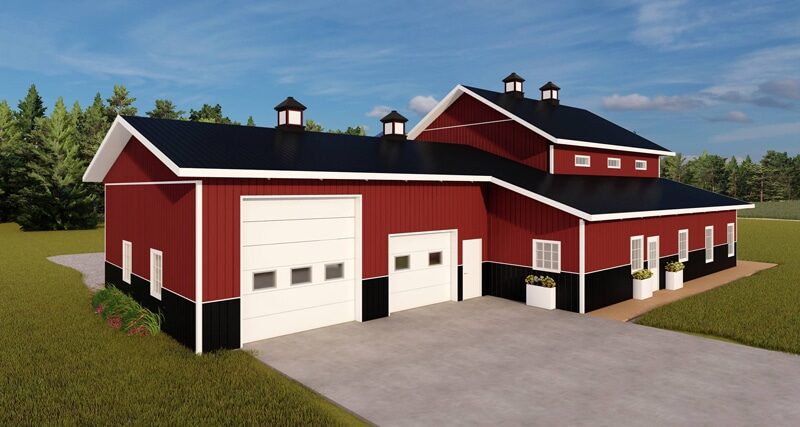
Quick Answer
A barndominium is a barn-inspired home that combines open living space with an attached shop or garage under one roof, typically built with a post-frame system. In the region, expect roughly $225 to $355 per square foot for a finished build, with the structural shell delivered to lock-up first. Final pricing moves with site conditions, snow and wind requirements, layout size, and the finishes you select.
Introduction
Anyone who has priced a conventional acreage home knows the frustration of watching costs climb before the foundation is even poured. Rural buyers want space for a workshop, room for the family, and a structure that holds up through a hard winter, yet traditional stick framing rarely delivers all three without inflating the bill. This is the practical gap that post-frame design fills, pairing large clear-span interiors with a shell built for serious weather.
Those strengths explain why barndominium construction in Western Canada now appeals to many working families. Specialist crews now deliver an engineered, slab-on-grade shell to the lock-up stage, complete with stamped drawings and a code analysis ready for your permit, an approach used by barndominium builders in Western Canada.
From there, your own contractor finishes the interior, keeping the structural budget predictable while you control finish costs.
Where Your Money Actually Goes
Budgeting for a hybrid home starts with a basic reality: the headline number you see online rarely matches what lands on your property. Pricing shifts with the size of the footprint, the complexity of the design, and the level of finish you choose once the structural shell is sealed. Most builders separate these stages, completing the weather-tight envelope first, then handing the interior to your trades.
How Builders Break Down the Numbers
The clearest way to read a quote is to see where each dollar goes. A typical project splits into a few predictable categories, and knowing them helps you avoid surprises.
- Engineering and design, including stamped drawings and a code analysis for your permit.
- The foundation and shell, covering laminated posts, trusses, roofing, and metal cladding to lock-up.
- Interior finishing, where your contractor handles plumbing, wiring, insulation, and cabinetry.
- Site preparation, such as access, grading, and servicing, which varies widely by parcel.
Pro Tip: Ask for the lock-up stage to be quoted separately from finishing. It lets you compare structural envelopes accurately without finish choices distorting the comparison.
Reading the Cost Per Square Foot
In practice, a finished home generally runs between $225 and $355 per square foot, while a detached working bay costs far less because it needs no living-grade interior. A useful benchmark is a professionally engineered envelope of roughly 2,500 square feet of living space plus an attached garage, which often starts near $335,000 before taxes, freight, and interior work.
Two identical layouts can carry different price tags purely because one location demands heavier structural specs than the other. Honest Western Canada barndominium cost planning, therefore, begins with your land, not a brochure.
Picking a Layout and the Right Materials
Once the budget framework makes sense, attention turns to how the building goes together. The right mix of plan, posts, and cladding determines how the home functions day-to-day and how it performs over decades.
Matching the Plan to How You Live
Open interiors are the signature of this style, since the structural load runs through widely spaced columns rather than internal walls. That freedom lets you position a great room, a loft, and a working bay wherever they suit your routine. Many barndominium floor plans in Canada pair a single-level main living zone with a bonus loft above the entry or garage.
- Single-storey designs favour accessibility and simpler servicing.
- Loft setups add bedrooms or an office without enlarging the footprint.
- Split living and work wings keep noise, dust, and fumes away from family rooms.
Comparing the Two Main Build Paths
Buyers usually weigh a pre-engineered kit against a builder-delivered envelope. The table below sets the practical trade-offs side by side.
|
Factor |
Pre-Engineered Kit |
Builder Shell to Lock-Up |
|
Engineering |
Generic, often re-stamped locally |
Site-specific stamped drawings |
|
Site adaptation |
Limited |
Tailored to soil and climate |
|
Labour |
Mostly your responsibility |
Professional crew installs |
|
Cost certainty |
Variable once finished |
Clear scope to lock-up |
In short, kits can lower the entry price, while a builder-delivered envelope removes much of the structural risk on a difficult site. The result is a building shaped equally by lifestyle and structure, which leads into the climate factors behind every sound plan.
Designing Around Snow, Wind and Frost
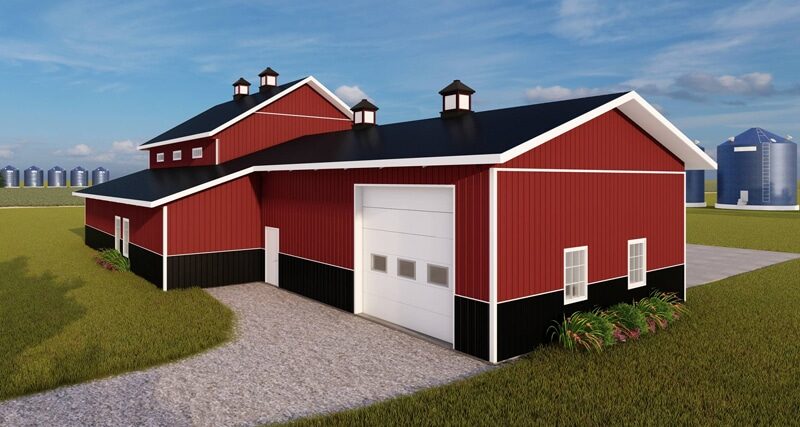
Most guides stop at price and looks, yet the factor that most affects a safe build is site-specific engineering. The forces acting on your roof and columns change from one parcel to the next, which is exactly why a stamped design matters.
Snow, Wind and Frost Loads
Codes of Canada set specified ground snow and wind values for every location, and those figures drive truss spacing, column sizing, and bracing. Mountain valleys here carry some of the heaviest snow loads in the country, while open plains face heavy drifting driven by strong, cold winds.
You can confirm the official requirements through the National Building Code of Canada. A well-built post frame barndominium in Canada answers these demands with engineered trusses and a continuous path that carries force from the roof peak to the ground.
Protecting the Foundation From Heave
Ground movement is a common risk on cold sites, able to lift an unprotected footing several inches in a single season. Solid design handles this in a few proven ways.
- Anchoring laminated posts into precast concrete column foundations, which keeps wood members above grade and out of soil contact.
- Adding rigid perimeter insulation, placed horizontally and vertically, to hold ground heat near the foundation.
- Using a well-drained slab-on-grade to limit moisture beneath the structure.
For buyers comparing house builders in Western Canada, the deciding question is rarely style. It is whether the engineering truly reflects the conditions the land will face for decades. A plan matched to real loads is what separates a comfortable home from a costly repair.
Key Takeaways for Your Barndominium Build
Planning a durable hybrid home comes down to three clear priorities: read the budget in stages, match the layout and materials to how you live, and insist on engineering tuned to your exact site. Treat the headline figures as a starting point rather than a promise. A realistic post frame barndominium in Canada begins with the land, the loads, and a stamped design, which together turn a rough concept into a sound, lasting build.

 Abbukkhar Kangharnnia
 Dpzhuk Znnkberin


 Gary Cripps