Decorator’s Guide: Transform Your Den with Custom Luxury and Rich Textures
 Nophyn Tesil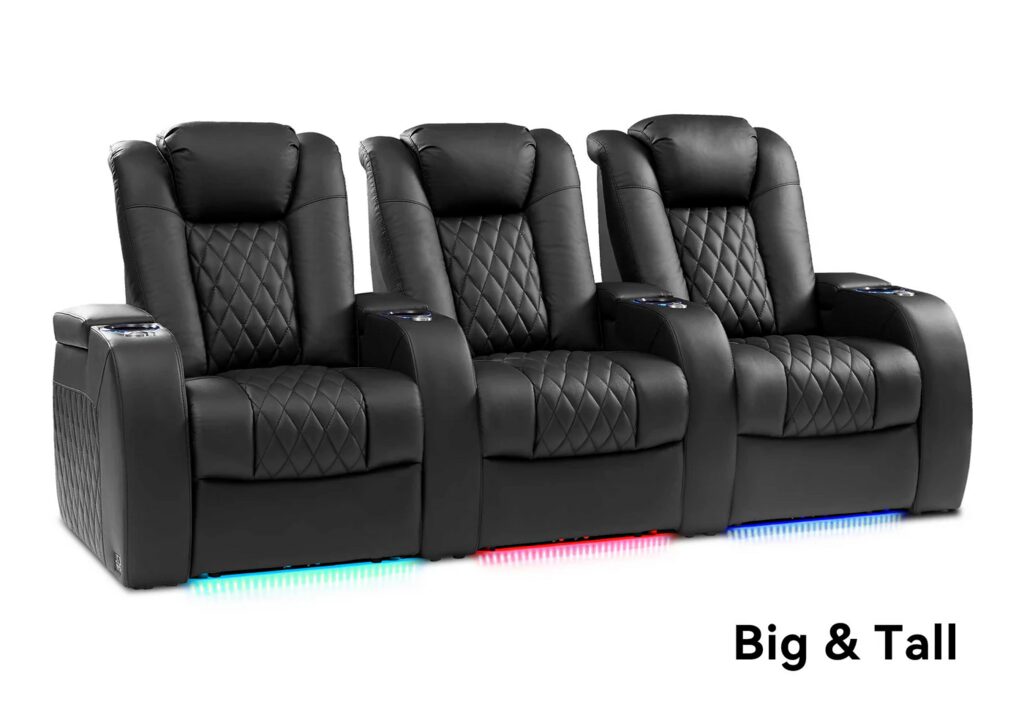
A luxury den should feel tailored, comfortable, and usable every day, not like a showroom or a dark theater box. Start with the room’s viewing purpose, choose custom seating that fits the space, then layer tactile materials that improve both comfort and sound.
Does your den have good bones but still feel flat, crowded, or unfinished when you sit down to watch a film, game, or series? A practical benchmark is that a 12-by-18-foot room can usually seat six people comfortably when equipment, furniture depth, and walking space are planned together. This guide shows how to turn that kind of everyday room into a polished media den with better seating, richer texture, and a layout that actually works.
Define the Den’s Role Before Buying Furniture
Choose the Primary Use
A den can become a luxury media room, a quiet reading lounge, a family movie room, or a flexible entertaining space. The mistake is trying to make it all of those things with no hierarchy. Before selecting custom seating or textured finishes, decide what happens in the room most often: two people watching films, a family streaming shows, friends gathering for sports, or a mixed-use lounge with occasional movie nights.
The Spruce describes media rooms as dedicated spaces for streaming, movies, or sports, but the best dens still need to function beyond the screen. If the room is used daily, avoid a layout that only supports forward-facing viewing. A sectional with a chaise, a pair of swivel chairs, and a low ottoman may serve better than rows of theater recliners if conversation, reading, and casual lounging matter as much as cinematic viewing.
Set Capacity Without Crowding
Start with the actual room dimensions, then work backward from seating depth and circulation. Leave clear walking paths of about 30 to 36 inches where people need to pass behind or beside seating. If using recliners, measure them fully extended, not just upright; many luxury recliners need 60 to 70 inches of total depth once the footrest is open.
For a compact den, four excellent seats usually feel more luxurious than six compromised ones. A 12-by-18-foot room can often handle six seats with media equipment, according to The Spruce, but that does not mean every den of that size should be filled wall to wall. If the room has a fireplace, windows, built-ins, or a desk zone, seating capacity should be reduced so those architectural features still have room to breathe.
Decide Between Theater and Lounge
A true theater-style den is organized around the screen, with aligned seating, controlled light, and a stronger acoustic plan. A lounge-style den is softer and more layered, with furniture arranged to support both viewing and conversation. Architectural Digest’s examples show that high-end screening rooms do not have to look like black boxes; luxury media spaces can include oak paneling, windows, fireplaces, lamps, art, pillows, and blankets.
This distinction matters because it affects every purchase. Theater seating favors recline, cupholders, head support, and sightlines. Lounge seating favors flexible modules, mixed chair types, side tables, throws, and lighting at multiple heights. A custom luxury den can combine both, but one mode should clearly lead the design.
Select Custom Luxury Seating That Fits the Room
Match Seating Type to Viewing Behavior
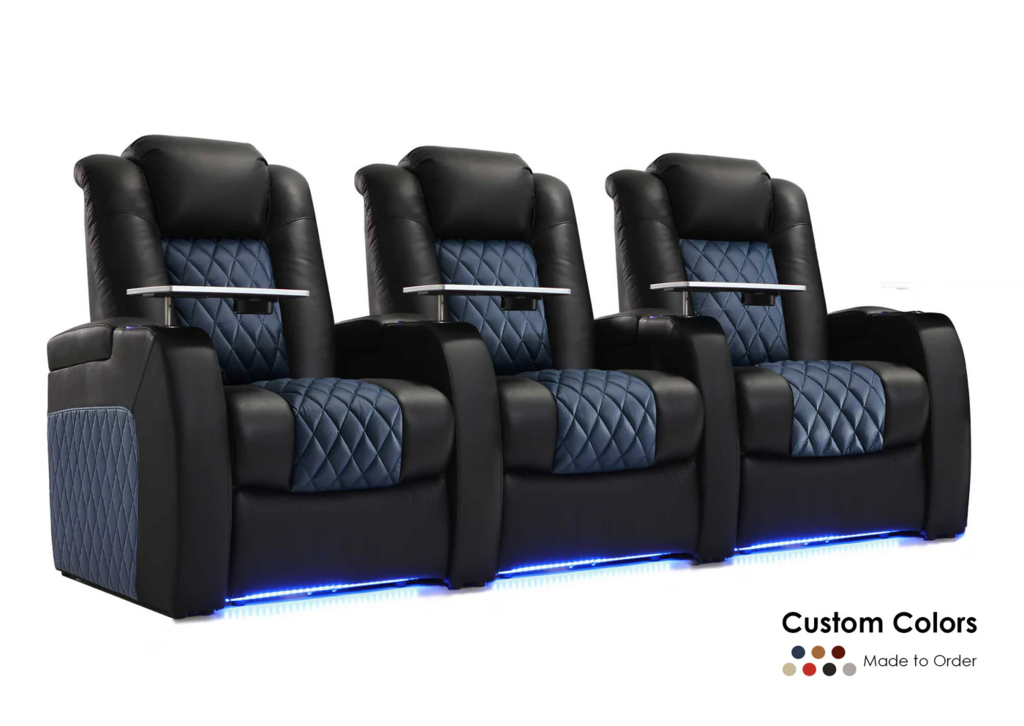
Custom seating should be chosen by how people actually sit. For long films, powered recliners with headrests, lumbar support, and extended footrests make sense. For sports and social gatherings, a deep sectional with performance upholstery may be more practical because people shift positions, talk, eat, and move around more often.
CinemaTech, a bespoke home theater seating and acoustic design company founded in 1998, frames luxury seating around comfort, style, performance, and cinematic viewing. That is a useful checklist for decorators: the seat must look appropriate in the den, support the body for long sessions, and work with the room’s sound and sightline plan. A beautiful chair that blocks a speaker, reflects glare, or forces a strained neck angle is not a luxury upgrade.
For material and layout planning, custom home theater seating can serve as a useful reference when comparing dimensions, upholstery, and configuration needs for a refined den.
Use Custom Dimensions Carefully
Custom does not mean oversized. In many dens, the most refined solution is a tailored sectional with reduced arm width, custom chaise orientation, or modular pieces sized to the wall. A 96-inch sofa may outperform a 120-inch sectional if it leaves room for side tables, floor lamps, and a clear path to the door.
For recliner rows, confirm seat width, arm width, recline clearance, and aisle spacing before ordering. In a den under 14 feet wide, a three-seat recliner row with broad arms may dominate the room; two wider recliners plus a swivel chair can feel more intentional. If the den is also a lounge, consider one custom sofa facing the screen and two swivel chairs angled near the fireplace or bookcase, allowing the room to change posture without moving heavy furniture.
Prioritize Support Over Features
Luxury seating often comes with cupholders, hidden storage, motorized recline, USB charging, tray tables, lighting, massage, and heat. These features are useful only when they support the room’s habits. A decorator should ask which features will be used weekly and which will make the seating look too technical for the den.
For most upscale dens, the strongest feature set is simple: supportive cushions, quiet power recline, adjustable headrests, durable upholstery, and built-in storage only where it disappears visually. If the den has a refined residential style, choose concealed controls and low-profile arms instead of highly visible gadget panels. The goal is furniture that feels custom-built for the room, not imported from a commercial theater.
Choose Rich Textures That Improve Comfort and Performance
Balance Leather, Velvet, Wool, and Performance Fabric
Texture is not only decorative; it changes how the room feels, sounds, and ages. Leather adds structure and patina, especially in club chairs or recliners, but it can reflect sound and feel cool at first contact. Velvet adds depth and absorbs light beautifully, but it needs the right cleaning plan. Wool rugs, heavy drapery, textured wallcoverings, and bouclé or chenille upholstery can soften the acoustics while making the den feel layered.
Architectural Digest’s feature on luxury home theaters includes Ralph Lauren’s Double RL Ranch screening room, where leather armchairs, Pendleton and Beacon blankets, and red cotton-velvet curtains create a richly tactile setting. The lesson is not to copy that exact Western style; it is to mix firm, smooth, plush, and woven surfaces so the room has depth. A den with leather seating, a wool rug, lined curtains, and a few substantial throws will usually feel more complete than one relying on a single expensive sofa.
Use Soft Surfaces Where They Matter Most
The Spruce notes that soft sectionals, heavy drapery, thick carpeting, velvet, and textured walls can help absorb sound. In practice, the most effective den upgrades are often the least flashy: a dense area rug under the main seating group, lined curtains over windows, upholstered seating instead of all-hard furniture, and fabric or wrapped acoustic panels placed where echo is strongest.
For a media den, prioritize texture near the listening zone. A rug should extend under at least the front legs of the seating and ideally cover the area between the seating and the screen wall. Drapery should be full enough to create folds when closed, not stretched flat across the window. If the room has bare drywall, wood floors, and a large television, adding fabric and wool will often make dialogue clearer and the room less tiring during long viewing sessions.
Avoid a One-Texture Room
A den can feel expensive but lifeless if every surface is smooth, dark, and polished. Pair leather with woven wool, velvet with matte wood, lacquer with linen, and metal accents with natural grain. This contrast is what makes a room feel designed rather than simply furnished.
A reliable texture formula is one dominant upholstery, one secondary upholstery, one substantial rug, one window treatment, and two or three smaller tactile accents. For example: cognac leather recliners, a charcoal wool rug, olive velvet pillows, walnut built-ins, and brushed brass reading lamps. The palette stays controlled, but the hand-feel changes across the room.
Plan the Layout for Viewing, Conversation, and Movement
Position the Screen Around Comfort
Viewing comfort depends on distance, angle, and height. In a den, the screen should be large enough to feel immersive but not so high that viewers tilt their heads for two hours. When a television is placed above a fireplace, the seat distance and mounting height need extra care because the screen can easily sit too high.
Architectural Digest notes that John Legend and Chrissy Teigen’s Los Angeles media room includes a built-in Samsung television above a fireplace, paired with a B&B Italia sectional and a vintage Osvaldo Borsani chair. That kind of arrangement works best when the seating is deep enough, far enough back, and low enough to reduce neck strain. If the den has a fireplace wall, test the viewing height with painter’s tape before finalizing built-ins or stonework.
Leave Space for Tables and Everyday Use
Luxury dens fail when they look complete but have nowhere to place a drink, remote, book, or snack bowl. Every primary seat should have access to a surface within easy reach. In a custom plan, that may mean narrow drink ledges between recliners, nesting tables beside a sectional, or a long ottoman with a tray.
Keep the main coffee table or ottoman proportional to the seating. A table that is too small makes a large sectional feel stranded; one that is too large blocks movement and recline. In many media dens, an upholstered ottoman with a firm tray is more versatile than a sharp-edged cocktail table because it supports lounging, serving, and occasional extra seating.
Use Built-Ins to Make Technology Disappear
Custom built-ins, cabinets, shelving, and credenzas can frame the television, hide speakers, and add a luxury finish, as The Spruce notes. The key is to design storage around the equipment first. Ventilation, cable paths, speaker placement, game consoles, streaming boxes, and subwoofer locations should be planned before millwork is drawn.
A well-designed den might use a built-in wall with closed lower cabinets for equipment, open shelves for books and art, acoustic fabric panels near speakers, and a recessed screen bay to reduce visual bulk. If the room is small, avoid surrounding the television with too many small objects. A cleaner wall with fewer, larger decorative elements usually reads as more refined and reduces visual distraction during viewing.
Layer Lighting and Acoustics Like a Decorator
Build Three Lighting Levels
A luxury den needs lighting for watching, reading, cleaning, and entertaining. Use at least three layers: dimmable overhead or cove lighting, mid-level lamps or sconces, and low accent lighting near shelving or built-ins. This allows the room to shift from bright and practical to soft and cinematic without relying on a single ceiling fixture.
Avoid placing bright downlights directly over viewers’ faces or in positions that reflect on the screen. Wall sconces, shaded table lamps, and warm shelf lighting usually create a better media atmosphere. If the den has windows, lined drapery or shades should be part of the lighting plan, not an afterthought, because glare can flatten the image and make daytime viewing uncomfortable.
Treat Sound Without Making the Room Look Technical
An enclosed room is generally better suited for surround sound than an open-concept space, according to The Spruce. That does not mean the den needs to look like a recording studio. Acoustic performance can be improved with rugs, curtains, upholstered furniture, bookshelves, textile wall panels, and carefully placed speakers.
CinemaTech highlights custom acoustic treatments as a way to improve dialogue, music, and overall sound. For decorators, the practical takeaway is to integrate sound control into the material plan. Fabric-wrapped panels can be matched to wall color, drapery can double as light and sound control, and built-ins can conceal speakers without blocking performance.
Control Echo Before Adding More Speakers
Many homeowners assume poor sound means they need more equipment. Often, the issue is reflection: hard floors, bare walls, glass, and minimal upholstery cause dialogue to bounce around the room. Before upgrading to a larger sound system, add soft materials and listen again.
A simple test is to clap sharply in the empty or nearly finished den. If the clap produces a bright ring or flutter, the room needs absorption. Add a thick rug, lined curtains, upholstered pieces, or fabric panels before judging the speaker system. This approach is especially useful in dens with wood floors, large windows, and plaster or drywall surfaces.
Add Luxury Details Without Overbuilding the Den
Use Real Examples as Scale Checks
Luxury media rooms range widely in size and mood. Architectural Digest describes George Clooney’s Casamigos home theater in Los Cabos with a 14-foot screen, while a Texas ranch screening room designed by John Cattrell seats 36 guests in leather-upholstered motorized seats. Those examples are impressive, but they are not the right model for most residential dens.
Use them as scale references instead. A 14-foot screen belongs in a large dedicated theater, not a modest den. Thirty-six motorized seats require a screening-room footprint and a circulation plan, not a standard family room. In a den, luxury is often expressed through better proportions, quieter technology, custom upholstery, and fewer but stronger furniture choices.
Create a Hospitality Zone
A den feels more complete when it anticipates how people spend time there. That may mean a built-in beverage drawer, a concealed snack cabinet, a sideboard for serving, or a small bar area outside the direct viewing zone. Architectural Digest mentions a Connecticut theater by Theo Kalomirakis with a snack bar and theater seats modeled after 1950s cars, showing how hospitality can become part of the experience.
For a residential den, keep the hospitality layer subtle. A walnut credenza with hidden storage, a stone-topped cabinet for drinks, or a tray station inside built-ins can support entertaining without turning the room into a concession area. The best version feels useful during movie night and still appropriate on a quiet afternoon.
Edit Accessories With Purpose
Pillows, throws, art, and objects should reinforce the den’s texture story. Use fewer, heavier pieces rather than many small accents. A large woven throw, two velvet pillows, a ceramic lamp, and framed art can add warmth without cluttering surfaces or distracting from the screen.
Blankets are especially useful because they add comfort, color, and acoustic softness. The Ralph Lauren screening room example from Architectural Digest used Pendleton and Beacon blankets as part of the room’s identity. In a modern den, the equivalent might be cashmere throws, wool blankets, or quilted performance-fabric pillows that look tailored but invite daily use.
Practical Next Steps
Start by measuring the den, including wall lengths, window locations, door swings, fireplace depth, and the fully extended depth of any reclining furniture. Decide whether the room should behave more like a theater or a lounge, then cap the seating count before selecting upholstery or custom features.
Choose one main seating piece, one supporting chair type, one rug, one window treatment, and one built-in or storage strategy. Layer leather, velvet, wool, wood, and acoustic textiles with restraint, making sure every seat has a comfortable view, a nearby surface, and lighting that can be dimmed. The strongest luxury den is not the one with the most features; it is the one where custom seating, rich texture, sound, light, and daily comfort all support the same clear purpose.

 Abbukkhar Kangharnnia

 Gary Cripps