
 Avedyn Phytes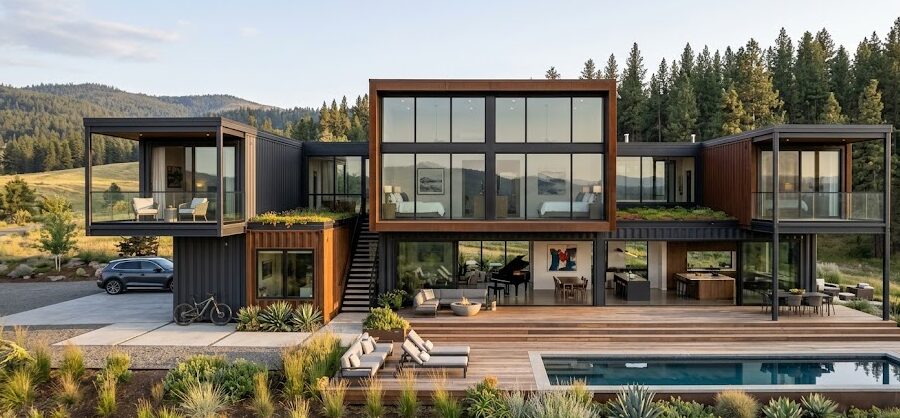
Designing a spacious family home no longer means following only traditional construction methods. More homeowners are now looking at alternatives that combine functionality, modern aesthetics, and smarter use of materials.
Container homes have moved far beyond niche architecture. Today, they are being explored by families who want modern design, flexible layouts, and a more efficient path to building. For buyers interested in roomy, design-forward housing, sustainable shipping containers offer a practical starting point for creating a four-bedroom home with strong visual character and adaptable space.
Why 4-Bedroom Container Homes Are Gaining Attention
A four-bedroom container home offers enough space for families, remote work, guests, or multigenerational living while still keeping the modular appeal that makes container construction so attractive. Unlike smaller container dwellings, it can comfortably include a full living room, a spacious kitchen, multiple bathrooms, storage, and better privacy between rooms. Its growing appeal also comes from design flexibility, since containers can be placed side by side, stacked, or combined with framed additions to create bright, open layouts.
How Many Containers Are Usually Needed?
A true four-bedroom container home usually requires multiple units. In most cases, designers use several 40-foot containers, sometimes combined with conventional framing to create wider living areas or improve circulation. In the end, the overall comfort of the home depends less on the number of containers and more on how well they are arranged.
Popular Layout Ideas for 4-Bedroom Designs
Single-Story Courtyard Layout
This is one of the most family-friendly options. Containers are placed around a central courtyard or patio, creating a private outdoor zone that becomes an extension of the living space. Bedrooms can be separated into quieter wings, while the kitchen and living room sit at the center.
This layout works especially well for warm climates and households that value indoor-outdoor living. It also creates a strong sense of privacy from the street.
Two-Story Family Layout
A stacked design is often used when the building site is smaller or when owners want a more traditional house-like arrangement. In this setup, common areas usually stay on the ground floor, while bedrooms are grouped upstairs.
This layout can provide better separation between active and quiet spaces. It also creates opportunities for balconies, covered patios, and dramatic window placements that make the finished home feel more architectural.
Split-Zone Layout
A split-zone plan places the primary bedroom on one side of the home and the remaining bedrooms on the other. The kitchen, dining area, and living room connect the two sides. This is an excellent solution for families who want privacy for parents, guests, or older children.
It can also work well for owners who need a home office that feels physically removed from louder shared areas.
Hybrid Container-and-Frame Layout
This approach uses containers for bedrooms, utility spaces, or structural edges, while a framed central section forms a wider open-plan living area. It keeps the industrial character of container architecture but reduces one of its biggest design limitations: narrow width.
For many homeowners, this is where design and livability meet most successfully.
What Affects the Cost of a 4-Bedroom Container Home?
Cost can vary significantly depending on location, labor, engineering, land conditions, and finish level. A modest, cleanly finished design will sit in a very different range than a high-end architectural showpiece with luxury interiors and extensive site work.
|
Cost Factor |
Typical Range |
What It Covers |
Why It Matters |
|
Containers |
$3,500-$8,000+ per used 40-foot container |
Purchase of the main structural units |
The number and condition of the containers shape the base budget |
|
Delivery and Crane Placement |
$1,000-$5,000+ |
Transportation to the site and equipment for unloading and positioning |
Costs rise if the site is remote or difficult to access |
|
Foundation |
$8,000-$25,000+ |
Footings, piers, slab, and site preparation |
A proper foundation is essential for safety, leveling, and durability |
|
Structural Modifications |
$15,000-$50,000+ |
Cutting openings, joining containers, reinforcement, and welding |
Larger layouts with open living areas need more steel work |
|
Insulation and HVAC |
$10,000-$30,000+ |
Thermal insulation, ventilation, heating, and cooling systems |
Steel homes need strong temperature and moisture control |
|
Plumbing and Electrical |
$15,000-$40,000+ |
Wiring, outlets, lighting, pipes, drainage, and fixtures |
These systems must be integrated carefully and meet local codes |
|
Interior and Exterior Finishes |
$30,000-$100,000+ |
Drywall, flooring, kitchen, bathrooms, cladding, windows, and doors |
The finish level has one of the biggest effects on total cost |
|
Permits, Engineering, and Design |
$5,000-$20,000+ |
Drawings, structural calculations, approvals, and inspections |
Container homes often require detailed professional documentation |
It is also important to remember that container homes are not automatically cheap. The container itself may represent only a small portion of the total project budget. Once transport, crane placement, welding, framing, insulation, and finishing are added, the overall investment starts to resemble other custom home builds in many markets.
That said, container homes may still offer cost advantages when the design is efficient, the site is accessible, and the project team has experience with modular construction.
Key Planning Considerations Before Building
Before moving from concept to construction, homeowners should evaluate several practical factors that affect both comfort and long-term performance:
- Local building codes and engineering requirements to ensure the project meets legal and structural standards
- Insulation strategy and site logistics so the home performs well in real conditions, not just in design renderings
- Ventilation, moisture control, and sound insulation to create a healthier and more comfortable indoor environment
- Solar orientation and window placement to reduce overheating and improve natural light throughout the day
- Room layout based on daily routines, since placing children’s bedrooms near entertainment areas, for example, may lead to noise problems
- An experienced project team that understands both residential construction and container modification, which is often essential for achieving a functional and well-planned result
Conclusion
A well-designed 4-bedroom container home can deliver far more than novelty. It can provide generous living space, a strong visual identity, and a thoughtful layout that supports modern family life. Whether you prefer a single-story courtyard arrangement, a stacked two-level home, or a hybrid build with broader open spaces, the most successful projects combine smart planning with realistic budgeting and durable construction choices. Before committing to a layout, it also helps to read more about how to choose the right container for construction https://www.urbansplatter.com/2026/02/how-to-choose-the-right-container-for-construction/, so that the design begins with the right structural foundation. In the end, container homes work best not because they follow a trend, but because they can be shaped into highly functional homes with character, flexibility, and long-term value.

 Abbukkhar Kangharnnia






 Gary Cripps

