
Why Your Job Site is Still Waiting for Concrete (and How to Fix It)
 Abbukkhar Kangharnnia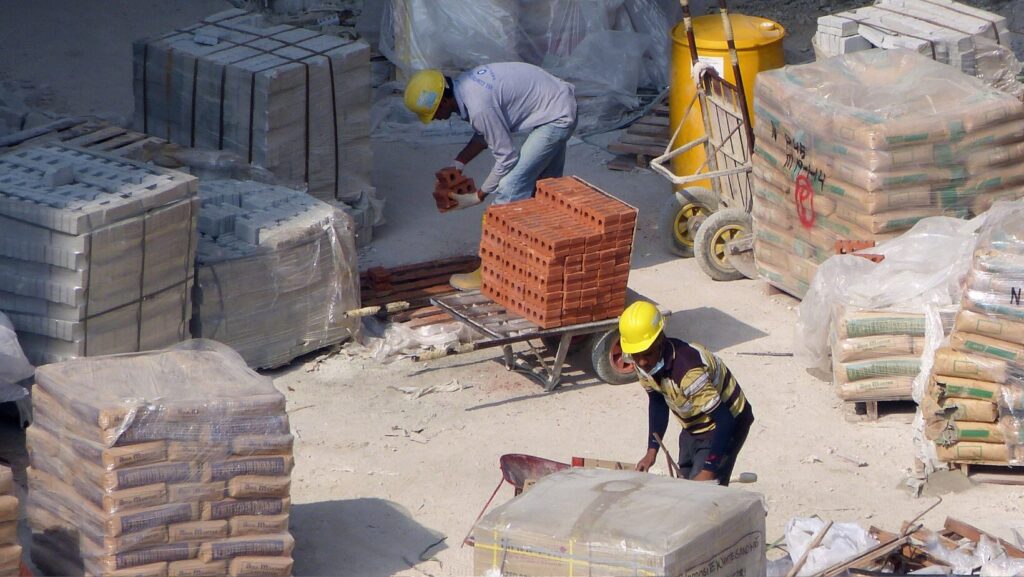
Every experienced project manager has a horror story about the “missing” shipment that ground a job site to a halt. Whether it’s a fleet of trucks stuck in traffic or a specialized HVAC unit that vanished somewhere between the factory and the staging area, supply chain failures are the silent killers of construction profitability. Managing the procurement, transportation, and delivery of materials isn’t just a back-office task; it is the fundamental engine that keeps a project on schedule. When the logistics chain breaks, the labor costs keep ticking even if the hammers aren’t swinging.
The Invisible Backbone of Modern Job Sites
Logistics in the construction world is far more complex than simply ordering parts from a catalog. It involves a massive, fragmented network of manufacturers, distributors, and wholesalers who often use incompatible record-keeping systems. This fragmentation creates information silos where material origins and delivery schedules are easily lost or distorted as they move between stakeholders. Without a centralized strategy, project managers find themselves unable to verify if materials meet specifications or track the progress of critical deliveries in real-time.
A successful build requires a synchronized dance between procurement and on-site reality. This means coordinating long lead times for specialized steel with the immediate need for lumber or concrete. Because of this complexity, the industry is seeing a massive shift in how it views management roles. Employers now prioritize professionals who can bridge the gap between engineering and business leadership. Developing these specialized skills often starts with a formal education, such as earning an online bachelor’s in construction management, which prepares professionals to navigate the nuances of global procurement and digital inventory systems.
Solving the Opacity Problem with Technology
The construction industry has long struggled with a lack of transparency, but new technologies like blockchain are beginning to offer a way out of the fog. By creating a distributed ledger system, companies can record every transaction in a chronological, tamper-proof block. This allows for material authenticity verification, ensuring that counterfeit products—which pose serious safety and liability risks—don’t make it into the build. When every batch of concrete or steel has a digital “fingerprint” including quality test results and environmental impact assessments, the entire chain becomes more reliable.
Beyond just tracking materials, digital tools enable the use of smart contracts to automate payment processing. In a traditional setup, payments are often delayed by manual reporting errors and disputes over whether a delivery actually arrived. Smart contracts can trigger payments automatically once a delivery is verified on-site, which helps maintain healthy relationships with suppliers and ensures that materials keep flowing. This level of automation reduces the administrative burden on managers and lets them focus on the physical build rather than chasing invoices.
Managing Storage and the “Just-in-Time” Dilemma
Once materials arrive, the challenge shifts to storage and staging. Construction sites, especially in dense urban environments, rarely have the luxury of infinite space. “Just-in-time” delivery is the ideal, but it requires pinpoint accuracy in transportation logistics. If materials arrive too early, they clutter the site and risk damage from the elements or theft; if they arrive too late, the project stalls.
Effective logistics managers must balance several competing risks when planning site storage:
- Weather Vulnerability: Lumber and sensitive electronics must be staged in climate-controlled or covered areas to avoid costly remediation.
- Site Congestion: Over-ordering creates safety hazards and limits the mobility of heavy machinery like cranes and excavators.
- Double Handling: Moving materials multiple times because they were dropped in the wrong spot is a massive waste of labor and time.
- Theft and Fraud: Transparent records of delivery and ownership transfer help eliminate common frauds like material substitution or false invoicing.
Professionalizing the Procurement Process
As projects become more technically demanding—incorporating things like green building standards and BIM (Building Information Modeling)—the role of the logistics professional has expanded. It is no longer enough to be a “foreman who is good with a spreadsheet.” Modern managers need to be proficient in technologies like CAD and Rivet while understanding the intricacies of sustainability tracking and carbon footprint reporting. Regulatory agencies are increasingly demanding comprehensive audit trails for compliance with safety and environmental codes.
Education programs are evolving to meet this need, offering pathways that blend technical engineering knowledge with leadership training. By mastering the procurement and delivery cycle, construction professionals can move from reactive “firefighting” to proactive project oversight. When you can anticipate a delivery delay a week in advance rather than an hour after the truck was supposed to arrive, you gain the power to adjust schedules and save the project’s bottom line. In the end, the most efficient job sites aren’t necessarily the ones with the most workers, but the ones with the smartest supply chains.

 Avedyn Phytes
 Gary Cripps
 Dpzhuk Znnkberin
 Nophyn Tesil


