7 Smart Checks Small Bedrooms in Australian Homes: What Size Flush Mount Fan Actually Fits?
 Gary Cripps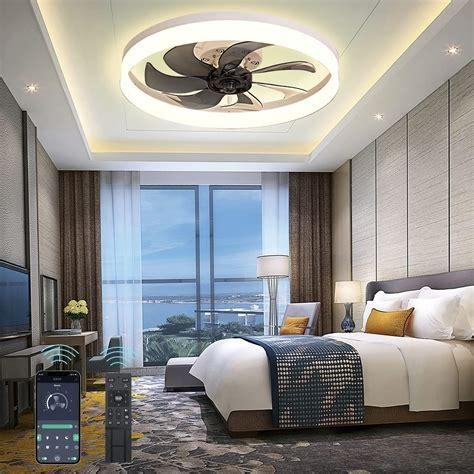
If you have a small bedroom in Australia, picking a flush mount fan can feel oddly stressful. You want enough airflow to sleep well, but you do not want blades that look huge, sit too close to the walls, or make the room feel cramped. And because many Australian bedrooms are not generous in size, especially secondary bedrooms, kids’ rooms, guest rooms, and apartment bedrooms, a fan that is “fine on paper” can still feel wrong once it is actually on your ceiling.
The good news is that there is a simple answer for most people: for a small Australian bedroom, the practical sweet spot is usually a flush mount fan between 900mm and 1220mm, with 1220mm often being the safest everyday choice for bedrooms around 8 to 14 square metres. That lines up well with current Australian guidance from the National Construction Code for bedrooms in relevant climate zones and with room-size guidance used by established Australian fan brands. The tricky part is not just room area. It is also ceiling height, blade clearance, bed position, wardrobes, and how close the fan sits to you while you sleep. [ABCB NCC, 2026, housing provisions for room heights and ceiling fans; Hunter Pacific sizing guide, current retail guidance; CHOICE, 2026, buying guide]
:contentReference[oaicite:0]{index=0}
This article is built to help you answer one very practical question: what size flush mount fan actually fits your small bedroom, not just in theory, but in real life? You will see easy formulas, common room examples, simple buying rules, a few mistake stories you will probably recognise, and clear links to Australian sources you can actually use today.
Why flush mount fans make sense in small Australian bedrooms
A flush mount fan, sometimes called a hugger fan, sits close to the ceiling. That is useful when your room has a standard-height ceiling and you do not want the fan hanging low over the bed. In Australia, habitable rooms generally need a ceiling height of 2.4m under the NCC housing provisions, and many fan installation instructions also say blades should be at least 2.1m above the floor and at least 300mm from nearby objects or walls. So when your bedroom is compact, a flush mount model often helps you keep that safe, comfortable clearance without the fan feeling like it is dropping into the middle of the room. [ABCB NCC, 2026, room heights; Voltex installation instructions, current manual; Atom Lighting FAQ, current product guidance]
:contentReference[oaicite:1]{index=1}
Key takeaway: flush mount is usually about vertical fit, while fan diameter is about horizontal fit. You need both to work at the same time. A fan can be low-profile and still be too wide for your room. That is where most buying mistakes happen.
Another reason flush mount fans work well is comfort. A ceiling fan does not really cool the room itself; it helps cool you by moving air over your skin. CHOICE explains this clearly, and Australian housing guidance also notes that fan-created air movement can improve comfort a lot, especially when paired with smart cooling habits. In very practical terms, that means a correctly sized bedroom fan can help you sleep better and may let you use air conditioning less aggressively. [CHOICE, 2026, consumer buying guide; YourHome, 2026, heating and cooling; Australian Housing Data, current dashboard summary]
:contentReference[oaicite:2]{index=2}
The short answer: what fan size fits most small bedrooms?
If you want the fastest answer possible, use this:
| Bedroom size | Typical area | Flush mount fan size that usually fits | Best everyday use |
| Very small box room | Up to 8m² | 900mm to 1060mm | Kids’ room, study-bedroom, tiny guest room |
| Small bedroom | 8 to 12m² | 1060mm to 1220mm | Most second bedrooms and apartment bedrooms |
| Upper end of “small” | 12 to 15m² | 1220mm | Main bedroom that is compact, or a square guest room |
Why these ranges? Hunter Pacific’s current room-size guide says rooms up to 8m² can use roughly 90cm to 122cm fans, while 8 to 16m² rooms usually suit 122cm to 132cm. The NCC’s current fan table also says that in climate zones 1, 2 and 3, a bedroom under 15m² needs at least one 900mm fan, and a bedroom from 15m² to under 20m² needs at least one 1200mm fan. So for small bedrooms, 900mm is often the minimum that fits the rules, while 1220mm is often the most satisfying size in daily use. [Hunter Pacific, current size guide; ABCB NCC, 2026, Table 13.5.2]
:contentReference[oaicite:3]{index=3}
That said, “fits” and “feels right” are not always the same thing. A long, narrow room with a wardrobe close to one side may be better with a 900mm or 1060mm fan even if a 1220mm model technically fits. This is why you should never buy by square metres alone.
The 2 simple formulas that stop most buying mistakes
Formula 1: Room area = room length × room width
This is your starting point. Measure the usable bedroom floor area in metres.
Example: if your room is 2.8m × 3.2m, the area is:
2.8 × 3.2 = 8.96m²
That puts you in the small-bedroom range where 1060mm to 1220mm is usually the best place to start looking.
Formula 2: Side clearance = (room width − fan sweep) ÷ 2
This checks whether the fan is too close to the walls or furniture line. Convert the fan size to metres first.
Example: if the room width is 2.8m and the fan is 1.22m wide:
(2.8 − 1.22) ÷ 2 = 0.79m
That gives you about 790mm from blade tip to each side wall if the fan is centred. That is comfortably above the 300mm minimum clearance commonly stated in Australian installation instructions. [Voltex installation manual, current; Atom Lighting FAQ, current]
:contentReference[oaicite:4]{index=4}
Key takeaway: if your clearance result is only a little above 300mm, the fan may be legal but still feel too crowded. In a bedroom, extra breathing room often feels better, especially over a bed or beside tall wardrobes.

What the Australian rules and guides really mean for you
There are three practical pieces of Australian guidance you should combine.
First, room height. The NCC housing provisions say habitable rooms generally need 2.4m ceiling height. [ABCB NCC, 2026, Part 10.3] :contentReference[oaicite:5]{index=5}
Second, fan requirements in some climates. The current NCC fan table says that in climate zones 1, 2 and 3, and zone 5 in NSW and Queensland for non-bedroom habitable rooms, minimum fan diameters are linked to room size. For bedrooms under 15m², the minimum listed size is 900mm. [ABCB NCC, 2026, Part 13.5] :contentReference[oaicite:6]{index=6}
Third, installation safety. Australian installation guidance commonly requires blades to be at least 2.1m above the floor and at least 300mm from walls or nearby objects. Also, electrical wiring work must be done by, or under the supervision of, a licensed electrician. In NSW, the government says customers should receive a Certificate of Compliance for Electrical Work. [NSW Government, 2026, electrical compliance; Voltex installation instructions, current; Atom Lighting FAQ, current]
:contentReference[oaicite:7]{index=7}
So the “scientific” way to choose a bedroom fan in Australia is not to chase the biggest fan you can physically squeeze in. It is to balance:
- area so the fan moves enough air,
- clearance so it is safe and does not feel crowded,
- mounting height so a flush mount fan still clears the floor properly,
- climate zone so the choice makes sense for how much cooling you need.
The fan size that usually works best by bedroom type
| Real-life bedroom type | Common example size | Best flush mount fan size | Why it works |
| Small apartment bedroom | 2.7m × 3.0m = 8.1m² | 1060mm | Good airflow without making the ceiling look crowded |
| Typical second bedroom | 3.0m × 3.0m = 9.0m² | 1220mm | Often the nicest balance of comfort and coverage |
| Compact main bedroom | 3.2m × 3.6m = 11.52m² | 1220mm | Strong airflow, still sensible for a flush mount setup |
Here is the plain-English version:
Pick 900mm if your room is tiny, your bed sits close to a wall, or you have a tall robe nibbling into the fan zone.
Pick 1060mm if your room is modest and you want a safe middle ground. This is especially handy when you are unsure whether a 1220mm fan will look too dominant.
Pick 1220mm if your room is a normal small bedroom, roughly 8 to 14 square metres, with decent side clearance. This is the size many people end up happiest with because it usually feels strong enough on hot nights without forcing you to run the fan flat out all the time.
That last point matters. Hunter Pacific notes that a fan that is too small will not move enough air, while one that is too large can overpower the space and feel out of place. [Hunter Pacific, current size guide] :contentReference[oaicite:8]{index=8}
3 everyday scenarios you can picture immediately
Scenario 1: the apartment bedroom with a queen bed
Your room is around 2.8m by 3.1m. The bed takes up most of the visual space, and there is a built-in wardrobe on one side. You could physically fit a 1220mm fan, but if the robe doors and bedside pendant already make the room feel busy, a 1060mm flush mount fan may feel calmer and still work well.
Scenario 2: the kid’s room with bunk beds
The room is only 2.6m by 2.9m. This is exactly the kind of space where people get tempted by a big fan because summers are rough. But if bunks or loft-style furniture lift the sleeping area higher, a 900mm flush mount fan is usually the safer, more comfortable choice. The smaller sweep lowers the chance of the room feeling crowded overhead.
Scenario 3: the guest room that doubles as an office
The room is 3.0m by 3.3m. You have a sofa bed, desk, and a tall bookcase. Here, a 1220mm flush mount fan often works beautifully if the centre of the room is clear. It gives better airflow when the room is used for sleeping, but still feels balanced for everyday use as a home office.
3 very common mistakes, and how to avoid them
Mistake story 1: “I bought the biggest fan because hotter is better.”
This sounds sensible, but it often backfires in a small bedroom. An oversized fan can create too much draft directly over the bed, especially at low ceiling heights. You then end up using a lower speed all the time and wondering why the big upgrade does not feel especially useful.
Fix: in most small bedrooms, choose the fan that gives solid coverage without pushing too close to the walls or furniture. That often means 1060mm or 1220mm, not automatically the largest option.
Mistake story 2: “I only checked the room area.”
Area matters, but room shape matters too. A narrow room can have the same area as a square room and still suit a smaller fan because one wall is much closer to the blade path.
Fix: use both formulas. Check area first, then side clearance.
Mistake story 3: “The fan fits the room, but not the life in the room.”
This is common in bedrooms with bunk beds, tall wardrobes, a hanging light, or a bed placed off-centre. The fan looks fine in an empty plan, but in real use it feels too close to where people stand up, stretch, or lift storage boxes.
Fix: stand in the room and look up. Imagine opening robe doors, making the bed, lifting luggage, or changing sheets. The best fan size is the one that fits your daily movement, not just your tape measure.
Should you go 900mm, 1060mm, or 1220mm?
This is the comparison many shoppers really want.
| Fan size | What it feels like in a small bedroom | Big advantage | Watch out for |
| 900mm | Neat, compact, low visual impact | Safest fit in tiny or awkward rooms | Can feel underpowered in warm, stuffy bedrooms |
| 1060mm | Balanced and easy to live with | Great middle option when you are unsure | May still be slightly small for upper-end small bedrooms |
| 1220mm | Usually the most comfortable all-rounder | Strong airflow for 8 to 14m² rooms | Needs decent wall and furniture clearance |
My practical call for most readers is simple: if your small bedroom is around 9 to 12 square metres and your layout is not awkward, a 1220mm flush mount fan is usually the best answer. If your room is tighter or visually crowded, step down to 1060mm. If it is truly tiny or has bunk beds or bulky wardrobes close to the fan zone, 900mm is the safer bet.

What about power use, noise, and motor type?
Once you have the size right, the next thing that shapes daily comfort is the motor. CHOICE says DC fans are now the most common, are generally more efficient than AC fans, and often offer more speed options. Their latest testing estimated yearly running costs, based on eight hours a day for six months and electricity at 40 cents per kWh, at an average of $25 a year for AC fans and $17 a year for DC fans. [CHOICE, 2026, tested ceiling fan running-cost estimates]
That does not mean every bedroom needs a DC fan, but it does explain why many people prefer one: more speed settings, usually quieter operation at useful low speeds, and lower running costs over time. For a bedroom, those small differences matter more than they do in a hallway or spare room.
Key takeaway: for sleep, low-speed comfort matters more than maximum speed bragging rights. A fan you can run gently all night is often better than a beast you only enjoy for 20 minutes before turning it down.
Can a fan really help with cooling costs?
Used properly, yes. Australian government household guidance says around 40% of energy in the average Australian home is used for cooling and/or heating, depending on climate zone. YourHome also says fans can be combined with reverse-cycle air conditioning to improve cooling effect and reduce the energy used for cooling. [energy.gov.au, last month, household climate zone guidance; YourHome, 2026, heating and cooling]
Here is a very everyday way to think about it. If your bedroom fan makes you feel comfortable sooner, you may delay turning on the air conditioner, use it for fewer hours, or run it less intensely before sleep. In humid or very hot regions, that can be a meaningful comfort win even if the fan is not your only cooling tool. YourHome’s passive-cooling guidance also emphasises that design choices and air movement can significantly improve comfort and lower bills. [YourHome, 2026, passive cooling and climate design]
When a flush mount fan is the wrong choice
Flush mount does not automatically mean “best.” You should pause if:
- your ceiling is unusually high and you actually need the fan lower for better airflow,
- your room is long and large enough that one small flush mount fan will struggle,
- your sloped ceiling or beam layout creates awkward dead zones,
- your bed or furniture arrangement leaves the fan too close to where people stand up.
Hunter Pacific notes that room shape and ceiling shape can affect performance, and some rooms may need different positioning or mounting choices. [Hunter Pacific, current buying guidance]
In other words, flush mount is best when the room is compact, the ceiling is standard, and the centre of the room remains clear.
A quick, practical buying checklist you can use in 10 minutes
1. Measure the room. Write down length and width in metres.
2. Calculate the area. This tells you whether you are really dealing with a tiny bedroom or just a modest one.
3. Mark the centre point. Then look for robe doors, pendants, smoke alarms, and tall furniture nearby.
4. Run the side-clearance formula. Do not skip this.
5. Check ceiling height. Remember the room-height and blade-clearance reality, not just the brochure photo.
6. Decide between 900mm, 1060mm, and 1220mm. For many small bedrooms, 1220mm wins, but not always.
7. Choose motor type. If bedroom comfort is the main goal, DC is often worth considering for quieter, more flexible low-speed use.
8. Book a licensed electrician. Government guidance is clear that electrical wiring work must be done by, or under the supervision of, a licensed electrician. [NSW Government, 2026; Queensland Electrical Safety Office, current warning]

6 useful links you can actually use today
Ceiling fan on Wikipedia — a quick plain-English refresher on what a ceiling fan is and the basic parts you will see in product listings.
ABCB NCC room heights — the official Australian code page showing the usual 2.4m habitable-room ceiling-height rule that matters before you choose a flush mount fan.
ABCB NCC ceiling fan table — the official fan-size requirements by room area and climate zone, very handy if you want the code view rather than guesswork.
ABCB Climate Map — a free official tool where you can search your address, suburb, or postcode to see which climate zone your home falls into.
CHOICE ceiling fan buying guide — a trusted consumer guide explaining sizing, running costs, installation, lights, and what matters for bedrooms.
NSW Government electrical compliance requirements — a practical official page showing why electrical wiring work needs a licensed electrician and what compliance paperwork customers should expect.
A few final “yes or no” answers
Can a 1400mm flush mount fan fit a small bedroom?
Sometimes physically, yes. Usually comfortably, no. In most genuinely small bedrooms, it is more fan than you need unless the room is at the very upper end of the size range and is nicely clear.
Is 900mm too small?
Not for tiny rooms. It can be exactly right in a box room or tight kid’s room. But for a normal small bedroom around 9 to 12 square metres, many people will prefer the feel of 1060mm or 1220mm.
Is 1220mm too big for a 3m by 3m room?
Usually not. A centred 1220mm fan in a 3m by 3m room still leaves roughly 890mm to each wall from the blade tips, which is generous. This is why 1220mm is such a common sweet spot.
Do you really need a flush mount fan for a standard bedroom?
Not always. But if your ceiling is standard, you want the fan to sit higher, or you dislike the look of a downrod in a compact room, flush mount is often the cleaner and more comfortable choice.
The bottom line
If you came here wanting one practical answer, here it is: for small bedrooms in Australian homes, the fan size that actually fits most often is 1220mm, provided the room is roughly 8 to 14 square metres and the layout gives you healthy clearance from walls and furniture. If the room is tighter, go to 1060mm. If it is truly tiny or awkward, go to 900mm.
The reason this answer works is simple. It matches the current Australian picture from several angles at once: NCC room-height rules, current NCC ceiling-fan size requirements in relevant climate zones, current Australian buying guidance on room size, and real installation clearances used in product instructions. That is a much better approach than buying by guesswork, showroom looks, or the old “bigger must be better” habit. [ABCB NCC, 2026; Hunter Pacific, current; CHOICE, 2026; NSW Government, 2026]